We'll email you a secure link to enter — no password needed. Your journal is saved to your account, so it's always with you.
We've sent a sign-in link to .
Open that email on this device and tap the link to enter your journal.
✦ ✦ ✦
The Mirror Within
Journal
by Mennen E.K.
Welcome to The Mirror Within Journal
A journey to reflect, heal, and awaken
Here, you enter a sanctuary.
A pause from the noise of the world,
a doorway into a softer, quieter space within you.
This journal is not a task to complete.
It is a place to arrive in — slowly, gently —
where you can breathe, listen inward,
and meet yourself with tenderness.
You are not here to "fix" anything.
You are not broken.
You are unfolding.
This journey invites you to polish the mirror of your heart,
so the clarity, peace, and wisdom already living inside you
can shine again.
Through guided reflections and simple prompts,
you will meet parts of yourself that have long waited
to be seen, understood, and lovingly welcomed home.
Some pages may soothe you.
Others may stir something deeper.
Both belong.
Everything you feel is welcome here.
Move through this journal at the rhythm your heart chooses.
Wander. Skip ahead. Return to a page that calls you back.
Pause when you need to pause.
Breathe when you need to breathe.
Come back only when you feel ready to continue.
This is your journey.
Your mirror.
Your heart.
You are not alone here.
This space holds you with gentleness.
You are already enough.
Now…
whenever you're ready,
let us begin.
How to Use This Journal
This journal is divided into sections, each called a Journey.
Each Journey explores a different aspect of inner awareness.
You can start wherever something in you feels drawn.
These journeys were not created to be followed in a perfect order.
They were created as doors.
Each one opens into a different part of the inner path.
You don't need to follow an order.
You can move between Journeys, return to them, or pause when needed.
You may find yourself returning to certain Journeys more than others.
This is part of the process.
Some things will feel clear. Others may take time.
This is not something to complete. It is something to return to.
With every journey, another layer is revealed.
And through reflection, honesty, and presence, the heart gradually becomes lighter, clearer, and more aligned.
This is not a journey of becoming someone else.
It is a journey of returning to yourself beneath the noise.
A return to clarity.
A return to presence.
A return to the heart.
Begin where you are.
The Journeys
Each journey reflects a different aspect of inner awareness — offering space for reflection, honesty, and deeper understanding.
The Journeys are listed in the order they were written, but they are not meant to be followed in a fixed order.
You may move through them in any way that feels natural to you, entering the door your heart feels drawn to most.
Journey Beyond Judgment
Understanding judgment, assumptions, and perception.
Journey into the Shadow
Noticing what is hidden within.
Journey into Reclaiming Your Power
Moving beyond unconscious reactions and victimhood.
Journey into Inner Guidance
Cultivating taqwa, awareness, and inner alignment.
Everything you write stays in this browser, on this device — your reflections are never sent to us or anyone else. Because they live only here, they won’t carry over if you switch browsers or devices, or clear your browser data.
Your journal
Because your reflections live only on this device, it’s worth keeping your own copy — especially before clearing your browser or switching devices.
This will permanently erase everything you’ve written in this journal — every reflection, on every journey.
It can’t be undone, and there’s no copy anywhere else. If you’d like to keep what you’ve written, save a backup first.
Are you sure?
This is the last step. Everything you’ve written will be gone for good.
The page will reload as if you were opening the journal for the first time.
Entering the Journey
✦
Entering the Journey
A Gentle Introduction
Disclaimers
What this journal is — and what it is not
This journal is not a guide to gratitude lists, mindfulness routines, meditation practices, affirmations, or habit-building.
There are already many resources that cover these beautifully.
This journal brings together the kind of wisdom I searched for but could not find gathered in one gentle, accessible place : quiet inner teachings shaped into simple, practical steps drawn from books, teachers, spiritual traditions, and lived experience.
This journal is an invitation to gently polish the heart, to notice your inner patterns, and to walk toward more presence and inner peace.
The reflections you find here can nurture your self-awareness and support your inner healing.
They are not a substitute for therapy or mental-health care.
If your heart ever needs support beyond these pages,
a trained professional can walk beside you with care.
Honor your wellbeing.
Move at the pace that feels right for you.
Seek guidance whenever it feels supportive for your heart and your healing.
My intention was to gather the insights that transformed me and weave them into a gentle, step-by-step companion — a way to work on the heart and polish it like a mirror, opening inner pathways towards a peace you never thought existed.
✦
My Journey Towards Inner Peace
This journal was born from a personal search —
a quiet longing for inner peace, and a deeper understanding of the heart.
Before it could guide you,
it first had to guide me.
Why This Guided Journal
One of my intentions when creating this journal was to help you awaken a Quranic truth within yourself, a reminder of heart's central role in our journey.
"The Day when neither wealth nor children will benefit [anyone],
Except the one who comes to Allah with a sound heart."
(Quran 26:88–89)
If the heart matters so much in this life and the next,
isn't it time we started taking care of it?
Along my own path,
I realized that the key to changing our reality
does not lie outside us —
it begins gently, quietly, within.
When we search outward for answers,
we often feel lost, discouraged, or led down longer, heavier roads.
But the Quran reminds us that we shape our own reality,
and with that responsibility comes empowerment:
the ability to transform our lives from the inside out.
If someone else held the power over our lives,
we would never be able to change anything.
But because that power rests within us,
the journey toward inner peace becomes possible.
"Indeed, Allah will not change the condition of a people
until they change what is within themselves."
(Quran 13:11)
Throughout this journal, we will explore my personal understanding of the inner journey of self-awareness and the process of polishing the heart.
Along the way, you may discover patterns, insights, and moments of clarity that help you better understand your inner world — so that by the end of this journey, you may reflect, with deeper personal insight, on one simple question:
What would it mean for me to have a sound heart
— قلب سليم?
✦
Ancient Egyptians: A Glimpse into Ancient Wisdom
The heart held great importance for Ancient Egyptians.
They believed that at the end of one's journey, the heart would be placed on a scale — to be weighed, not against another person or against perfection, but against a single feather "The Feather of Truth" — a symbol of truth and lightness.
If the heart balanced the feather, the soul was free to pass into the next world.
If not, it would be devoured by a creature made of three powerful animals: a crocodile, a lion, and a hippopotamus.
This ancient ritual invites us into reflection:
What makes a heart grow heavy?
And what allows it to become light again?
Let this journal be a gentle journey that slowly lightens your heart — through awareness, and gentle unfolding.
✦
Who Said Paradise Doesn't Start on Earth?
Many traditions speak of Paradise
as something distant —
a place we reach only after this life.
But what if Paradise could begin here, on Earth?
As a state of mind in which nothing disturbs your inner peace?
As a way of being where your heart feels clear, steady, and at ease?
What if Paradise begins inside us first?
What if Paradise is not only a destination,
but a way of living —
cultivated through presence,
one soft moment at a time?
Intention, and Why It Matters
Before we begin, let's talk about the power of intention.
We spend our days doing so much — moving from task to task, place to place — but how often do we pause to ask why? What is the real reason behind our actions?
What if becoming aware of your intention unlocked a quiet source of resilience — helping you move through challenges with greater strength?
Take work, for example.
Most of us work to support ourselves and our families.
But what happens when you add a simple intention each morning?
I intend to add value to my colleagues or customers in new ways.
I intend to learn something today that brings me closer to my goals.
Now imagine two people:
one who begins the day with intention,
and one who simply moves through it.
When a challenge appears — as it always does — who do you think will feel more grounded and motivated?
the one anchored in intention,
or the one walking without it?
Setting a daily intention is a quiet form of nourishment.
It refuels your motivation,
and strengthens your inner resilience.
From a spiritual perspective,
intentions are honored and rewarded —
so why not infuse the things you already do each day
with a purpose that uplifts your heart?
This applies to everyone, in every role.
Even a stay-at-home mother,
pouring her energy into raising her children,
can shift her entire experience
by setting a simple intention: I intend to nurture future leaders —
souls who will shape tomorrow with strength and compassion.
With this intention in her heart,
every moment of support,
every teaching moment,
even every mistake she gently guides them through
gains new meaning.
New purpose.
The very same daily tasks
become infused with depth and inner strength —
all through a single, heartfelt intention.
"Knowing yourself is the beginning of all wisdom."
— Aristotle
✦
Ihsan إحسان
We cannot speak about intention without touching the beauty of Ihsan.
Ihsan means doing things with excellence — with sincerity, presence, and inner beauty. It is the quiet art of giving your heart to whatever is in front of you.
An artist practices Ihsan naturally, improving their work with each stroke, each color, each attempt to create something truer than the version before.
Innovation is also a form of Ihsan : finding new ways to do the same task with more excellence and ease.
In every action, you can bring Ihsan by gently asking yourself:
Where can I add a little more beauty — with grace, not pressure?
How can others benefit more from what I do?
How can I make someone's life easier through what I offer?
Ihsan can appear in the simplest of moments:
A chef preparing meals who chooses to refine the menu each year, welcoming customers with something fresh and thoughtful.
An employee at work who asks: How can I improve the way I do this task? How can I serve with more clarity and ease?
A stay-at-home mother who cooks with intention, nourishing her family with meals that support their wellbeing and carry her quiet love.
✦
Your Turn
Now, gently bring the focus back to yourself.
How can you bring Ihsan in your daily activities: at work, at home, with family, neighbors, or anyone in your circle?
Write what comes to you.
Ihsan is not perfection.
It is presence.
A softness.
A sincerity.
A way of offering something beautiful
to the world around you
through whatever you already do.
Set Your Intention
Before you begin this journey, take a moment to set an intention:
Why are you doing this inner work?
Close your eyes,
take a deep breath
Let your intention settle gently into your heart
You can return to this page anytime,
especially when you open the journal again,
to realign yourself with the intention you set.
Congratulations, your journey toward inner peace has quietly begun.
✦
Before you move to the next journey,
pause for a moment.
This journey is not about fixing yourself.
It is about seeing yourself clearly.
You have set an intention.
You have touched Ihsan — the way of doing things with presence and sincerity.
Carry this with you.
As you explore the next journeys,
you may discover thoughts, reactions, or patterns you didn't expect.
Meet them gently.
Not with judgment,
but with curiosity.
Not with pressure,
but with softness.
This is how the heart opens.
And this is how it transforms.
Journey Forward
✦
Journey Forward
Reflecting on What Has Unfolded
Come here once you have moved through all Journeys.
This space invites you to pause
and reflect on what has unfolded.
Notice what stayed with you,
what shifted,
and what continues to call your attention.
Some things may feel clearer now.
Others may still be unfolding quietly within you.
This is not an ending,
but a continuation.
Continuing the Journey
Now that we've reached the end of this journal and explored different ways to better understand our inner world, take a moment to reflect on the new awareness you've cultivated while reading it.
What is one thing I became more aware of about yourself?
What is one trigger / pattern I would like to understand better?
What would it mean for me to have a sound heart — قلب سليم?
Set an intention for the next chapter of your journey toward greater self-awareness.
Perhaps the intention we carry forward is simply this: to continue the journey of polishing the heart, so that we may one day come to Allah with a sound heart — قلب سليم.
Your intention:
The journey of self-awareness does not end here. It simply continues — one moment of awareness at a time.
Thank you
Before closing this journal, thank yourself.
Write a few words from your future self,
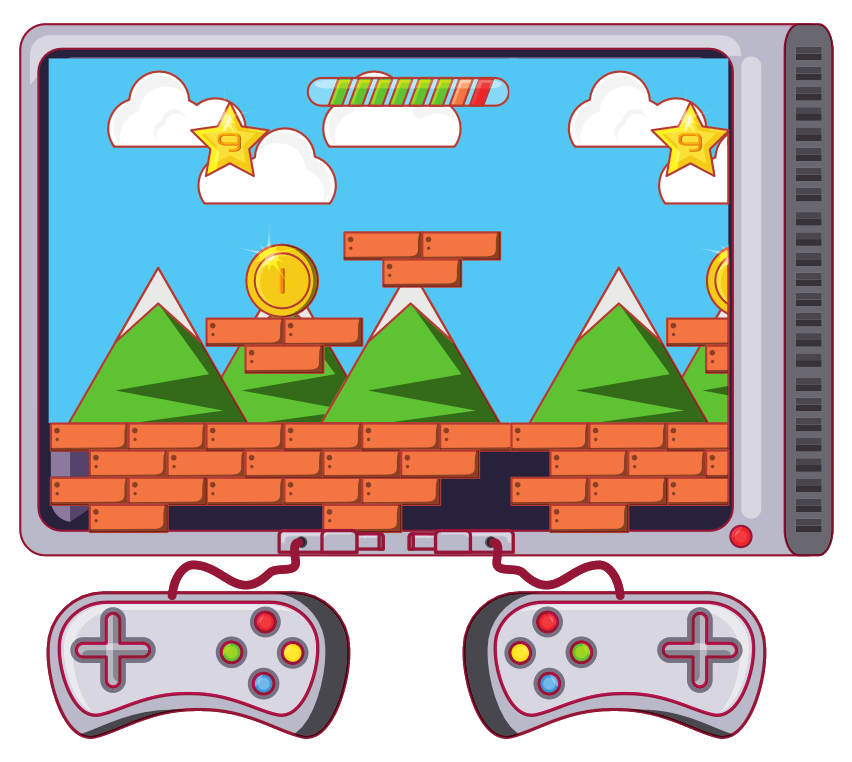
thanking you for playing this level with honesty,
for facing what needed to be faced,
and for choosing awareness over autopilot.
Every level counts.
Every step mattered.
Acknowledgments & Inspirations
In life, we are handed many "strings" from different sides and angles, which we then intertwine into our own work of art.
Every book I read, every course I took, and every lesson offered by teachers who crossed my path became a string of a different color and texture — each one contributing to the fabric of this journal.
You may come across some of the same sources and, from them, create something entirely your own — woven with your unique perspective, flavor, and touch.
Sharing my sources of inspiration is not enough to thank them. But it is my way of honoring them, and of inviting you to discover the strings that speak to you, and to add them to your own weaving — your own evolving work of art.
Teachers & Guides
– Abdul Hayy L. Holdijk
– Ahmed Emara
Foundational Influences
– Carl Jung — Depth psychology and the understanding of the shadow
Tools & Methodologies
– The 3-2-1 Shadow Process — created and formalized by Ken Wilber, and adapted here for reflective journaling.
Image Credits
If you are the copyright holder of any image included in this journal and wish to request attribution or removal, kindly contact me at: mirror.within.journal@gmail.com
Open Reflection
Date:
Date:
Date:
You don't need
to have it all figured out.
Just begin —
and notice what unfolds.
@mirrorwithinjournal
Journey Beyond Judgment
✦
Journey Beyond Judgment
Understanding Judgment & Assumptions
This Journey invites you to become aware
of how you see others and yourself.
Notice the quick labels,
assumptions,
and quiet conclusions that arise.
Not to change them,
but to begin seeing them clearly.
Judgments & Inner Peace
One of the quiet forces that pushes inner peace away is our habit of judging others — often without realizing it.
Many of these judgments come from old conditioning, from the "societal programming" we absorbed while growing up. When we begin to free ourselves from judgment, we naturally move closer to an inner peace that feels steady and uninterrupted.
First thing to change in our mindset is this:
To separate the action from the person.
Example: A person may be taking drugs.
Instead of hating the person and labeling them as "drug-addict". We can dislike the action without judging the human being behind it.
When we learn to make this distinction — and reprogram our reactions to do this automatically, we create less hatred and rejection in the world, and more understanding, compassion, and quiet acceptance.
Every human being was created by God. There is something divine within each person, as God created them from His Spirit / روح.
"So when I have proportioned him and breathed into him of My Spirit, then fall down to him in prostration."
(Quran 15:29)
How can we love the Creator, yet hate His creation?
Let us honor all human beings, even when we do not agree with their choices. We do not know their stories, their wounds, their struggles, or the turning points that may still come in their lives. Only God sees the full picture. We see just a fragment. Let us soften our judgments and make space for compassion instead.
Separating Person & Action
The only judge is God.
We need to be aware when we unconsciously give ourselves the right to play the role of judge, which we should refrain from..
﴿ إِنِ الْحُكْمُ إِلَّا لِلَّهِ ﴾
﴿ الأنعام ٥٧، يوسف ٤٠، يوسف ٦٧ ﴾
"Judgement / decision belongs to Allah alone."
[ 6:57, 12:40, 12:67 ]
Let's practice, shall we? This exercise invites you to separate the action from the human being.
Given Examples
Gamal is an alcoholic
→ Alcoholism is harmful, but Gamal — as God's creation — is worthy of compassion and dignity.
Sarah is a drug addict
→ Drug use is destructive, but Sarah — as God's creation — is worthy of compassion and dignity.
Your Turn
Ahmed is a cheater; he cheated in his exams
→— as God's creation —
Mariam is a liar; she lies all the time
→— as God's creation —
Amir is committing adultery
→— as God's creation —
Leila is cheating on her husband
→— as God's creation —
Yehia is a thief, he stole something from work
→— as God's creation —
Omar is a hypocrite; he gives compliments to his manager to climb the corporate ladder
→— as God's creation —
Pause for a moment.
Notice what this practice does inside you.
Does judgment soften?
Does resistance arise?
Do you feel discomfort — or relief?
This is not about justifying actions.
It is about releasing the habit of reducing a human being to a single behavior.
When we separate the doer from the deed, our hearts become lighter —
and inner peace has more space to return.
✦
My Own Judgometer
Now that you've practiced on some hypothetical examples, let's practice on real life examples..
Write examples of judgments you make on others, whether you know them personally or not (even your judgment on public figures, influencers, etc..).
For each one:
Write the judgment as it appears in your mind
Then rewrite it, separating the action from the person — just like you practiced on the previous page.
By doing this, you will gradually learn to shift the judgement: from the person → to the action that you dislike.
Invitation to Practice Positive Assumptions
حسن الظن
Now that we're aware of "negative" judgments we may place on others, what if we tried replacing them with positive assumptions?
One of the ways to reach inner peace, is not just to drop judgments, but to also adopt positive judgments on others, even when we don't have proof.
It's very easy to jump to conclusions about people around us, especially when something they do annoys us or goes against what we believe is right.
I once saw a situation that made this very clear.
I was on a plane. After landing, people were rushing to leave. One passenger kept asking the person in front of him to move. When the person didn't respond, he started shouting. The passenger in front didn't even turn around, which could easily be perceived as "rude".
Then someone came and started talking to him using sign language.
The man who was shouting was so ashamed of himself and felt very embarrassed, because he thought the other passenger was ignoring him, when in fact, he could not even hear him!
This incident that happened in front of me was a wake up call: what are the odds of this happening? It's so easy to automatically jump to conclusions.
That moment reminded me how quickly we judge people without knowing what they are dealing with.
Most of the time, we don't see the full picture.
This is why God asks us in the Quran to avoid negative suspicions about others. Whether we realize it or not, the way we think about people directly affects how we treat them.
The Quran clearly warns us against jumping to negative conclusions. It reminds us to avoid quick judgments and to practice حسن الظن — assuming good intentions when possible.
"O you who have believed, avoid much [negative] assumption. Indeed, some assumption is sin. And do not spy or backbite each other. Would one of you like to eat the flesh of his brother when dead? You would detest it. And fear Allah; indeed, Allah is Accepting of repentance and Merciful."
(Quran 49:12)
The Quran also uses the word "إثم" (sin) when speaking about making claims or judgments without real knowledge.
"Say, My Lord has only forbidden immoralities - what is apparent of them and what is concealed - and sin, and oppression without right, and that you associate with Allah that for which He has not sent down authority, and that you say about Allah that which you do not know."
(Quran 7:33)
This shows us that negative assumptions and speaking without certainty are not small matters. They are part of what God has warned us against and labeled as "haram" — forbidden.
But haven't we been always told that we are not held accountable for our thoughts?
"To Allah belongs whatever is in the heavens and whatever is in the earth. Whether you show what is within yourselves or conceal it, Allah will bring you to account for it. Then He will forgive whom He wills and punish whom He wills, and Allah is over all things competent."
(Quran 2:284)
When I came across this verse and understood its meaning, I realized the importance of becoming aware of what lies within us.
We are usually aware of our actions toward others — our words, our behavior, what we do on the outside.
But becoming aware of what happens inside us — our thoughts, intentions, assumptions, and judgments — takes much more effort.
That is why the inner work you are doing now is so important. Understanding your inner world is one of the most meaningful journeys you can ever take.
Now, let's return to our judgments of others. After letting go of negative judgments, what if we tried something else?
What if we paused, and looked for possible reasons or explanations for why people act the way they do?
✦
Let's Practice a Little Bit..
Example
What happened
My first thought / judgment
Other possible reasons (practice empathy)
A colleague at work did not offer to help me when I asked for support with a new task.
She doesn't like me
She doesn't want me to succeed
She is jealous
She may be under pressure with her own work
She may not have the skills needed to help
She may be dealing with personal issues that are taking a lot of her energy (e.g. sick family member)
Now it's your turn..
What happened
My first thought / judgment
Other possible reasons (practice empathy)
Check-in After Empathy
How do you feel now towards these people? Write a few keywords that describe how your feelings have changed after this exercise.
✦
"Your visions will become clear only when you can look into your own heart. Who looks outside, dreams; who looks inside, awakes."
— Carl Jung
✦
My Own Judgometer
From Judgment to Compassion
When a judgment rises, imagine a seed beneath the soil.
If you pause, that seed begins to sprout.
When you choose empathy & compassion, it blossoms.
This Judgometer is not about perfection.
It is about polishing the heart.
Through awareness, the heart softens.
Through softness, peace enters.
Observe. Reflect. Soften.
The goal is not to stop judging immediately.
The goal is to become aware of how often the mind judges.
اللهم طِّهر قلبي من سوء الظن والحُكم، واملأه رحمةً وليناً.
"O Allah, purify my heart from judgment and replace it with mercy."
Daily Tracker
Date
Did I judge anyone today?
Who?
What was I reacting to?
Did I pause before reacting?
Empathy / compassion
"Polish your heart until it becomes a mirror, so that through it you may see the reality of things."
— Ibn Arabi
What the Heart Holds, the Tongue Reveals
Judging others doesn't stay in the mind.
Sometimes, it slips into our words.
You might find yourself commenting on others' actions:
how someone is dressed,
how a TV presenter looks after surgery,
how your manager looks overweight,
how a colleague struggles to speak English,
how "ignorant" a political figure is,
When we make fun of others, we unconsciously think we're "better" than them.
The Qur'an gently brings attention to this subtle distortion within us:
"O you who believe, let not one group mock another — they may be better than them. Nor let women mock other women — they may be better than them. (...) And whoever does not turn back, then they are truly among the wrongdoers."
(Quran 49:11)
What begins as a feeling of being "above" others...
quietly finds its way into our words.
Our words carry power — not only over others, but also over ourselves.
Think of what happens when you eat something that isn't clean… or not fresh.
Your body feels it.
Your energy shifts.
Something inside is no longer at ease.
Your sleep becomes restless.
And slowly, your whole system carries the disturbance.
Now imagine living like this… every day.
No one would choose this consciously.
And yet… we do.
And when these words are spoken in someone's absence, we pay a price — in one way or another:
"And do not backbite one another. Would one of you like to eat the flesh of his dead brother? You would detest it. And be mindful of Allah; indeed, Allah is Accepting of repentance and Merciful."
(Quran 49:12)
Now imagine someone you don't know… who has just died.
Could you bring yourself to eat from their body?
It's unthinkable.
You naturally feel repulsed by it.
That deep sense of disgust…
this is what the verse awakens within you.
Because backbiting is not harmless.
It is the heart feeding on what is not pure.
Backbiting begins as judgment…
and becomes something heavier when it is shared.
It doesn't stop with you.
It spreads.
You influence how others see that person.
You pass on an image… a feeling… a distortion.
And the chain continues.
It's like holding dirt in your hands,
then passing it on —
from one hand to another…
until it reaches everyone,
leaving a trace each time.
✦
Even Silence Has a Role
Whether you speak it…
or quietly receive it…
the effect is not so different.
What you allow in,
you carry.
You don't have to force silence.
Just begin by noticing.
The moment a judgment forms,
pause…
and return to yourself.
Not everything you see
is what it seems.
Not everything you think
needs to be said.
And in that space,
something soft returns: your inner peace.
✦
A Gentle Reflection — Noticing Backbiting
Take a moment.
Not to judge yourself…
but to become aware.
Why do I do it?
Backbiting doesn't come from nowhere.
Pause and explore:
When I speak about someone, what am I feeling inside?
Am I trying to feel better about myself?
Am I seeking connection with others… through shared judgment?
Am I releasing something I didn't express directly?
Do I feel threatened, hurt, or insecure in some way?
Sometimes, backbiting is not about the other person.
It is about something within you… asking to be seen.
Reflect — what arises when you read this?
✦
Noticing It in Real Time
Begin to gently observe:
When do I feel the urge to comment on someone?
What happens in my body just before I speak?
Is there a subtle tightening… a reaction… a story forming?
You might notice:
a quick judgment
a need to "say something"
a pull to share it with someone
This is the moment.
Not after.
Not later.
Right here.
✦
Tracking the Pattern
Without overthinking, just notice:
Who do I tend to speak about most?
In what situations does it happen more?
What themes repeat in my words?
At the end of the day, you can gently ask:
When did I speak about someone today…
and what was happening inside me at that moment?
No guilt.
Just clarity.
✦
A Different Choice
When the urge arises…
Pause.
Take a breath.
And ask yourself:
Does this need to be said?
Would I say this if they were here?
What is the more honest or kind response right now?
Sometimes the shift is simple:
→ choosing silence
→ changing the subject
→ speaking with care instead of judgment
✦
If the Words Already Left
Don't harden.
Return.
You can:
acknowledge it within yourself
gently correct it if needed
or make a quiet intention not to repeat it
And move forward with awareness.
This is not about becoming perfect.
It is about becoming conscious.
Each moment you pause…
each word you choose not to say…
you are protecting something precious:
your heart,
and your inner peace.
Backbiting Reflection Tracker
At the end of your day, take a quiet moment.
Not to judge… just to notice.
Gentle reminder
This is not about catching yourself doing something wrong.
It is about seeing clearly…
and slowly choosing differently.
✦
Open Reflection
Date:
As judgment softens,
the heart becomes lighter
and more at peace.
As your words
become more conscious,
your inner space
begins to feel clearer
and more at ease.
@mirrorwithinjournal
Journey into the Shadow
✦
Journey into the Shadow
Noticing What Is Hidden Within You
This Journey is an invitation to gently meet the parts of yourself that may remain unseen.
Notice what you avoid, reject, or feel triggered by — within or around you.
What is hidden is not separate from you.
✦
The Circle of Life
If you imagine your life as a circle, you will notice people entering it: some staying briefly, others remaining much longer.
A few have been there since the day you were born — your parents, siblings. Others arrive later: classmates, colleagues, neighbors, friends who appear during different chapters of your life.
People come and go. Some bring warmth. Others frustrate you just by being there.
This frustration is not random. It is a messenger — whispering that something deeper inside you wants to be seen.
And even if you try to distance yourself, life often brings someone new who mirrors the same pattern — awakening the same reaction and frustration.
This cycle continues.. until you pause, and gently explore what the frustration is revealing within you.
Why the People in Your Circle Matter
The people in our circle are there for a reason, whether we realize it or not.
What truly matters is not the people themselves, but the insights you gain through your interaction with them:
what it awakens in you,
what it softens,
what it challenges,
and how it shapes your heart.
✦
Your circle of life — exercise
Take a gentle look at the people in your circle:
your friends,
your family,
your colleagues.
Take a moment to map them visually in the next page's Circle of Life. Gently add the people who are part of your life today —
those who are close,
those who are distant,
those who lift you,
and those who challenge you.
There is no right or wrong way to shape your circle.
Simply notice who appears, where you place them.
This is your circle as it exists right now — a snapshot of the connections shaping your journey.
Name
How long have they been part of your journey?
What might their presence be teaching you right now?
✦
As you look at the people in your circle, you may begin to notice certain inner reactions, triggered by some people, just by thinking about them.
Some people feel easy to be around — their presence brings calm.
Others stir something inside you, even when you can't explain why.
These moments are not random. They act like small mirrors, reflecting something within you, that is ready to be seen.
To understand these reflections, we need to look gently, honestly, at what is being mirrored back to us.
And this is where the shadow begins to reveal itself.
Understanding the Shadow
The "shadow" (a term introduced by psychologist Carl Jung), refers to the parts of ourselves that live outside our conscious awareness. To live a balanced life and whole life, Jung suggested we gently bring these hidden parts into our awareness — not by force, but by recognition.
The shadow holds the emotions we suppress, the traits we learned to deny, and the patterns we inherited long before we understood them. These parts of us are not "bad." They are simply unseen — waiting for light.
They are the pieces of our personality that have not yet stepped into the light of consciousness, and so the ego avoids them, protects us from seeing them too clearly, or distracts us from noticing what lies beneath.
Shadow work is the courageous act of inviting these hidden pieces back into awareness with compassion.
Our shadow self becomes most visible in the moments we feel triggered.
Someone who looks confident on the outside but carries a quiet shadow of insecurity may suddenly:
feel uncomfortable around highly successful people,
worry when their partner notices someone attractive,
or feel unsettled when a sibling is promoted, or when a close friend grows in unexpected ways.
These reactions can arrive suddenly and feel intense — but they are not signs of failure. They are signals. Gentle lights pointing to parts of you that need attention, understanding, and compassion.
Whenever your emotional response is stronger than the situation itself, it is often the shadow speaking — inviting you to pause, reflect, and look inward with compassion.
If we overlook or reject these hidden parts, an inner conflict forms - a tension between:
who we unconsciously are,
and who we consciously want to be.
This mismatch often shows up through our emotions, our reactions, and the patterns we find ourselves repeating.
Shadow work gently invites these hidden parts into awareness. It helps us understand what shapes our emotions and reactions, and to integrate these parts with kindness. This process creates more inner balance, more clarity, and a deeper sense of wholeness.
"Until you make the unconscious conscious, it will direct your life and you will call it fate."
— Carl Jung
✦
The Power of Self-Awareness
Shadow work invites us into a deeper level of self-awareness — a gentle practice of noticing our thoughts, emotions, and reactions with curiosity rather than judgment.
It is the soft light we shine on the parts of ourselves we don't often pause to explore.
This inner journey is much like peeling an onion.
Each layer reveals a version of who we have been — that may now be ready to soften, or be gently shed.
As we move through these layers, we may encounter emotions that feel uncomfortable, tender, or unexpected. This is a natural part of the unfolding.
With each layer we peel back, we come closer to our core — our truest self — and we begin to understand who we are with more compassion and clarity.
Shadow work can be challenging and emotional, yet it becomes profoundly transformative when approached with curiosity and kindness.
As we explore our inner layers, we not only understand ourselves more fully; we also begin to uncover strengths, qualities, and potentials that may have long remained hidden.
This inner journey asks us to move with patience and gentle courage, as we begin to meet the parts of ourselves we once overlooked, avoided, or simply never understood.
With every layer we soften and peel back, we come closer to our authentic self — the self beneath old patterns, automatic reactions that may be holding us back.
Self-awareness and self-acceptance are the foundations of shadow work. Through them, we gradually return to a sense of wholeness, inner alignment, and peace.
Understanding our triggers
A trigger is anything — a person, thing, or situation — that brings up an intense or unexpected emotional reaction.
When we feel triggered, we aren't "overreacting." We are responding from a deeper place inside us — a place asking for attention, clarity, or healing.
✦
Emotional Triggers Dump
First things first: let's list the triggers that keep showing up in your life and place them here, so you can examine them more closely.
During this exercise, if you feel any emotion, don't resist it.
Personal relationships (family, relatives)
Name
What feels triggering or difficult for me about this person?
Other relationships (colleagues, neighbors, friends, and others)
Name
What feels triggering or difficult for me about this person?
Congratulations : you've just taken an important step in your inner journey simply by acknowledging your triggers.
You may pause here and return when you're ready, or continue if you feel called to.
✦
Identifying Your Common Triggers
Now let's try to identify the common triggers in your life.. Take a look at the previous pages, and try to identify the common triggers.
Notice any common triggers that are repeated across different people in your life.
Try to summarize the triggers that show up the most. For example: disrespect, arrogance, unfairness, insensitivity, ungratefulness, selfishness, or any pattern that keeps resurfacing.
These patterns are gentle clues, revealing where your deeper healing wants to begin.
Write them - in no specific order:
✦
Now let's gently sort your triggers — from least triggering to most triggering.
Ranking your triggers is not about judgment. It is about clarity.
When we begin to see which triggers hold the strongest charge, we start to understand where our deeper patterns live — the roots beneath the surface that are ready to be brought into awareness.
Select one trigger to begin working on and mark the checkbox to note that this is your starting point.
Return to this list whenever you feel ready to work on another trigger.
Don't overwhelm yourself — take it one step at a time.
Once you begin addressing your first trigger, your inner journey will become even more meaningful, exciting, and empowering.
Write your triggers below and arrange them from least to most triggering. Tick the box beside the one you’ll begin with — your starting point.
Least triggeringMost triggering
"Be like a tree and let the dead leaves drop."
— Rumi
3 - 2 - 1 exercise
Let's work on triggers, one at a time.
✦
Let's continue our inner journey, to integrate our shadow self
Let's set a new intention together:
→ To gently explore whether this trait or behavior that triggers me in others might also be present within me — even in ways I haven't noticed.
Sometimes we overlook aspects of ourselves. We may even express the very behavior that triggers us in others — but with a different intention, a different justification, or in a form we believe is harmless or "not the same."
A trait that frustrates us in someone else may quietly exist within us — expressed differently, or disguised as something we believe is positive.
For example, if someone's curiosity triggers you, pause and ask yourself gently: "Where might this same curiosity be living in me, unnoticed or unlabeled?"
In the coming days, observe yourself with kindness.
Notice if you catch yourself doing the very thing that once triggered you — not to judge yourself, but to understand yourself more deeply, with honesty, compassion, and an open heart.
✦
Self-Reflection Practice
As you move through your day, notice if you find yourself expressing the behavior that once triggered you in someone else.
Example
I caught myself being curious when (person name) my sister
(what s/he was doing) was reading a book about self-development
I found myself asking her what this book's name is
I realized that I needed to know what book she was reading, maybe it's FOMO, or the fear of the possibility that my younger sister might learn something that I don't know yet, and being the eldest sister, I felt insecure if she knows something I don't.
Log your findings here
✦
Check in with yourself:
How do you feel now that you've noticed this trait within you — the same one that once triggered you in someone else?
Write freely, or simply allow a few words to come through.
And now… take a moment to be genuinely proud of yourself. It takes courage, awareness, and deep honesty to recognize something within us that we previously judged in others.
When irritation rises toward someone, it is often pointing to something within us that is ready to be seen, softened, or understood.
Do something kind for yourself now: a small act of joy to honor your progress.
Your journey has just begun, and it will unfold in ways that are meaningful, empowering, and deeply transformative.
As you free yourself, trigger by trigger, you will notice your resilience growing — not because you force yourself to control your reactions, but because you naturally react with more clarity, grounding, and ease.
✦
Emotions as inner puppies
Imagine your emotions as little playful puppies — full of energy, eager to respond to every sound, every movement, every moment. They get excited easily… and sometimes irritated just as quickly.
But what if these puppies could grow calmer, more grounded, and less reactive — not because you silence them, but because they feel safe, understood, and free from the tension that once agitated them?
What if your inner puppies (your emotions) were not easily disturbed by everything around them? Even if another "puppy" comes to try to disturb them, they're still in their inner peace state.
They're not disconnected from the world, just not reacting to its every attempt of disturbance.
The faults you see in others are your own faults, but hidden from you"
— Rumi
Finding your hidden treasure : golden shadow
What if you find yourself triggered not by someone's flaws — but by their goodness? By their generosity. Their confidence. Their kindness. Their joy.
Could it be just jealousy? Or could it be something deeper?
Let's explore gently. When someone feels anger, irritation, or discomfort in response to a positive trait in another person — like generosity for example — it often means that this very quality exists within them as a shadowed part: a trait they once had, but learned to hide, deny, or protect. This is sometimes referred to as the "golden shadow".
We tend to react most strongly to the qualities we have suppressed in ourselves.
For example: If someone gets angry at a generous person, it doesn't necessarily mean they are "selfish."
It could mean:
1. Generosity is a suppressed quality within them Maybe they naturally have a generous heart, but:
they were punished before for giving too much,
or people took advantage of them,
or they were taught that "being generous makes you weak,"
or they had to be self-protective in childhood.
So now, when they see someone giving freely, it touches a wound or a longing inside them.
2. It reminds them of a part they wish they could express People often feel anger toward traits they secretly desire to embody:
someone's confidence,
someone's freedom,
someone's joy,
someone's generosity.
The anger is the shadow saying: "This should have been me."
3. It exposes a belief that they had to adopt For example:
"If I'm generous, I'll be used."
"If I give, I'll lose security."
"Good people get hurt."
"People like that make me look small."
Seeing generosity challenges these defensive beliefs.
4. It threatens an "identity role" they built If their identity is built around:
being tough,
being independent,
being self-focused for survival.
Then generosity in others feels like a mirror showing another possible way — and that can feel threatening or confronting.
Life is a mirror where our self is being reflected, giving us the opportunity to observe our inner world
Additional Shadow worksheets
Return here whenever you feel ready to work on another trigger. Each set walks the same 3 · 2 · 1 path, followed by a space to log your findings.
3 - 2 - 1 exercise
✦
Log your findings here
✦
Open Reflection
What you are willing to see begins to lose its weight, making space for a deeper peace within.
@mirrorwithinjournal
Journey into Reclaiming Your Power
✦
Journey into Reclaiming Your Power
Noticing Your Inner Responses & Moving Beyond the Victim Mindset
This Journey explores your automatic responses as they arise.
It also brings awareness to the ways you relate to power and responsibility.
Notice what happens within you in moments of tension, discomfort, or intensity.
Even noticing after the moment has passed is part of awareness.
✦
Sailing through the sea of life
If you look at ships in the sea, only the strongest ones can overcome storms without being affected. Maybe they move a little, but if their design is resilient, they can overcome anything.
How strong do you want your inner ship to be as you sail through the sea of life ?
The waves will rise, the winds will shift, and the tides will change — but the strength of your ship comes from within you.
Through this journey, you are learning to build an inner ship that is steady, centered, and resilient — one that moves with life rather than being overwhelmed by it.
Now that we have begun the journey of understanding why we feel triggered by the actions of others,
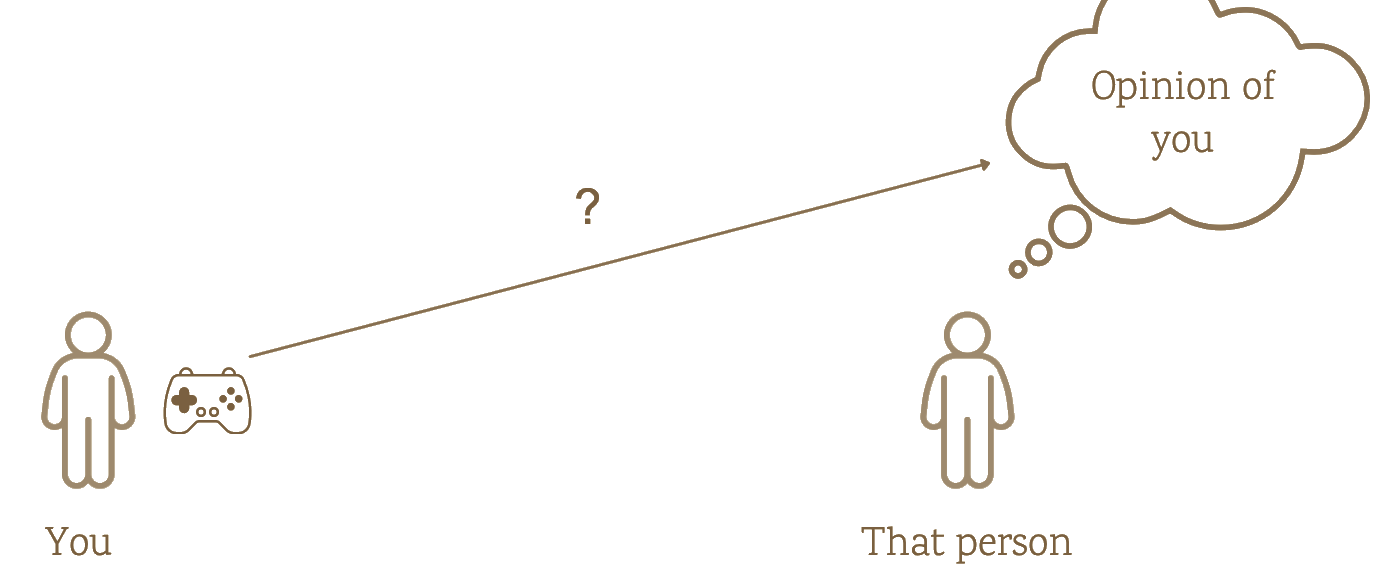
Let’s try to understand why we get triggered from what other people may say about us..
Our reaction to other people’s words:
Imagine this simple scene at work:
A colleague said something about me that I don’t like.
Let’s pause for an inner check-in.
→ How do I react: do I get frustrated or defensive ? Or does it mean nothing to me? Does my reaction change depending on who said it ?
When we respond with frustration or hurt, it creates stress. Over time, chronic stress can affect our physical and mental well-being.
Let’s set an intention before we start this new exploration journey.
Some ideas for intentions to set:
I want to improve my health by reducing unnecessary stress
I want to reduce conflicts at work and be at peace with my colleagues
I want to understand myself better, not take words personally
Write your own intention here:
✦
Let’s start with a concrete example in your life. Write about something someone said that left you feeling frustrated or unsettled:
Person
What s/he said about you
How triggered do you feel?
Not triggeredVery triggered
Now, let’s explore a bit..
How important is this person in my life ?
Not importantVery important
Why do I care about what this person thinks of me ?
Am I seeking their approval on some level?
Do I have reason to believe that this person had bad intentions when saying this?
If yes / maybe, what do you think their intention might have been?
Am I judging that person for what they said about me ?
If yes, what am I saying about them (in my head)? This is a safe place so write whatever crosses your mind:
Do I believe what s/he said about me?
Does s/he have the right to hold a different opinion of me?
If I had a magic wand, and could change what this person thinks of me, would I want to change it?
If yes, what would I want it to be
Whose opinion of me matters more ?
If my opinion matters more, why was I upset when that person had a different opinion of me ?
Can I allow myself to live in a world where others have different opinions about me?
Did that person say something :
✦
Let’s reflect..
Take a look at your answer to previous questions..
Now ask yourself:
Do I wish I could control what this person thinks of me?
Take your time. There is no rush here.
Whose opinion of me should matter the most?
If you notice that you often care deeply about how others see you — and that their opinions affect you internally — know that this is completely human. But it can also be draining.
When we give our energy away to external opinions, we quietly empty our inner battery without realizing it. But awareness changes everything.
When you become aware, you have a choice to change the course of your inner ship in the sea of thoughts.
So now that you’re aware of it when it happens, what can you do?
Let’s practice empathy a little bit ..
Gently place yourself in the other person’s mind. Imagine stepping into their world, seeing through their eyes, thinking as if you were them.
Write their name here: “I am ”
Now imagine possible reasons why this person might have said what they said.
If you’re having a hard time trying to think of reasons, try to imagine what they could be going through in their lives:
Hidden health challenges:
Struggles with family (husband, wife, children, parents):
Financial pressure or stress:
Other possible personal struggles:
This exercise is not about finding an excuse for their behavior. It is about remembering that every person carries a private world of burdens, fears, and pressures that shape how they think, speak and act.
When empathy enters, your heart softens — and the trigger begins to melt, and loosen its hold.
✦
Now, let’s deepen this practice of empathy.
What if you were this person’s lawyer — standing in their defense, trying to express the intentions behind what they said?
Let yourself speak from their perspective, as if you understand their unseen struggles, fears, or hopes.
Lawyer (you):
“My client only said this because …”
“My client thought that …”
“My client only wanted to …”
“My client’s intention was …”
✦
Let’s reflect..
Now back to you. The trial is over. For now, it doesn’t matter who “won.”
What matters is how you feel in this moment.
Gently replay in your mind what this person said — the words that bothered or unsettled you.
If it helps, rewrite their words here and bring the scene back into your awareness:
They said:
Now, on a scale from 1 to 5 (5 being “most triggered”), how do you feel now regarding what they said:
Not triggeredVery triggered
Compare this feeling to the one you had before you began this reflection exercise. Do you notice any shift, any softening, any difference at all?
If you feel ready, write how you feel toward this person now — in your own honest words:
“Inner peace begins the moment you choose not to allow another person or event to control your emotions.”
— Pema Chödrön
Victim mindset
Sometimes we unconsciously play the role of the victim in life, and indirectly blame others for what’s happening to us, whether we realize it or not.. we feel that life is unfair, that we are powerless when it comes to changing our circumstances.
Signs I may be adopting a Victim mindset:
Blaming Others (or Life) Often“They did this to me.”“If it weren’t for them, I’d be happy.”You may feel stuck in seeing others as the cause of your suffering — without exploring your own role or power.
Feeling Powerless or Trapped“There’s nothing I can do.”“This always happens to me.”It feels like life is just happening to you — not something you can shape or influence.
Avoiding ResponsibilityYou resist looking inward, taking ownership, or making changes.You might even feel afraid that admitting your part means you’re “bad” — rather than human and growing.
Replaying the Story of HurtYou keep mentally replaying how someone wronged you.The story gives you identity or emotional energy, even if it’s painful.
Using Language That Reflects Helplessness“I can’t.”“It’s not fair.”“Why me?”The focus stays on what’s not possible — not on healing, agency, or growth.
Comparing & Feeling Life Is UnfairFeeling that others have it easier.Believing your suffering is special or greater than others’.This can isolate you and deepen feelings of resentment or bitterness.
Resisting Change, Healing, or ForgivenessYou stay loyal to your pain rather than your potential.Part of you fears that if you forgive or grow, the pain might be invalidated.
✦
But it also comes with its own benefits:
Protection from ResponsibilityIt can feel safer to say, “It’s not my fault” — because taking responsibility can bring up guilt, shame, or fear of failure. By staying in the victim role, we avoid the discomfort of facing hard truths or making changes.
Validation & SympathyBeing seen as a victim often brings attention, care, and support from others. It can feel like the only way to get love or be acknowledged is to be struggling or wronged.
Avoidance of RiskWhen we believe we’re powerless, we don’t have to take risks or make tough decisions. There’s comfort in saying, “I can’t,” instead of “I’ll try and maybe fail”.
Sense of IdentityOver time, the victim role can become part of our identity — “I’m the one who always gets hurt,” or “People always leave me.” It can feel familiar, even if painful.
Avoiding Emotional PainBlaming others helps avoid facing inner wounds. It redirects attention away from deeper work (like healing childhood pain, shadow work, or confronting limiting beliefs).
These are short-term emotional comforts, but they can keep you stuck in the long run.
The deeper need beneath a victim mindset is often a desire for safety, acknowledgment, and love — which can be met in healthier, more empowering ways.
✦
Victim mindset - My Patterns
Gently notice which patterns feel familiar — especially in moments of discomfort.
Blaming Others (or Life) Often“They did this to me.”“If it weren’t for them, I’d be happy.”You may feel stuck in seeing others as the cause of your suffering — without exploring your own role or power.
Feeling Powerless or Trapped“There’s nothing I can do.”“This always happens to me.”It feels like life is just happening to you — not something you can shape or influence.
Avoiding ResponsibilityYou resist looking inward, taking ownership, or making changes.You might even feel afraid that admitting your part means you’re “bad” — rather than human and growing.
Replaying the Story of HurtYou keep mentally replaying how someone wronged you.The story gives you identity or emotional energy, even if it’s painful.
Using Language That Reflects Helplessness“I can’t.”“It’s not fair.”“Why me?”The focus stays on what’s not possible — not on healing, agency, or growth.
Comparing & Feeling Life Is UnfairFeeling that others have it easier.Believing your suffering is special or greater than others’.This can isolate you and deepen feelings of resentment or bitterness.
Resisting Change, Healing, or ForgivenessYou stay loyal to your pain rather than your potential.Part of you fears that if you forgive or grow, the pain might be invalidated.
From Victim to Empowerment
Notice the difference between reacting from pain and responding from awareness.
This is not about becoming perfect.
It is about slowly shifting from helplessness into conscious choice.
Victim Response
Empowered Response
“Why does this always happen to me?”
“What can I learn from this experience?”
“I can’t handle this.”
“I can take one small step at a time.”
“They ruined everything.”
“I still have the power to choose my response.”
“Life is unfair.”
“How can I support myself through this?”
“Nothing ever changes.”
“Change begins with awareness.”
“It’s too late for me.”
“I can begin again from where I am.”
“I’ll always be this way.”
“Patterns can change with awareness and practice.”
“No one understands me.”
“How can I express what I truly need?”
The goal is not to suppress your pain, deny your emotions, or pretend everything is okay.
The goal is to remember that even within discomfort, you still have choice.
✦
When I Notice the Victim Mindset Appearing…
Pause for a moment. Breathe. You do not need to judge yourself for what you are feeling.
Awareness is already a shift.
Instead of automatically reacting, gently become curious about what is happening within you.
Pause & Reclaim
What story am I telling myself right now?
What emotions am I feeling beneath the reaction?
What part of this situation feels outside my control?
What part is still within my control?
What would taking responsibility look like here — without blaming myself?
What is one small empowered step I can take?
You do not need to change everything at once. Sometimes reclaiming your power begins with one honest moment of awareness.
From Victim to Choice — Weekly Response Tracker
Throughout the week, gently notice which patterns arise.
Then reflect on how you responded — not perfectly, but with awareness.
Each small shift is a step toward reclaiming your power.
Date
Pattern
Empowered Response
Example: Jan 5
Feeling powerless or stuck
I reminded myself to focus on one small step instead of everything at once.
Blaming others (or life)
Feeling powerless or stuck
Avoiding responsibility
Replaying a story of hurt
Using helpless language
Comparing / feeling life is unfair
Resisting change or letting go
Notice the pattern. Then gently choose again.
✦
Weekly Reflection
Which pattern showed up the most this week?
In what situations did it usually appear?
Did I start noticing it earlier than before?
How did I respond differently — even in a small way?
What is one small shift I want to practice next week?
Notice how different thoughts create different inner states. Some thoughts keep you contracted and powerless. Others reconnect you to clarity, peace, and possibility.
Between what happens and how you respond,
there is awareness.
In that awareness, there is choice.
✦
The Trap of Control
As we begin becoming aware of patterns of helplessness, blame, or emotional pain, we may start trying to move away from those feelings by controlling what happens around us.
Without realizing it, control can become our attempt to never feel powerless again.
We begin believing:
“If I can control people, situations, or outcomes, then I can protect myself from feeling hurt, unsafe, or helpless.”
In this way, the need for control can become deeply connected to the victim mindset.
Instead of focusing on the deeper wound within us, we become focused on controlling the external situation that triggered the pain.
But true self-empowerment is not about controlling life.
It is about realizing that even when we cannot control what happens, we still have the ability to choose how we respond.
We can pause instead of reacting. Set boundaries instead of staying silent. Take responsibility instead of blaming. Support ourselves instead of abandoning ourselves. Choose awareness instead of remaining stuck in old patterns.
The opposite of helplessness is not control.
It is reconnecting to our ability to respond consciously.
✦
Signs I May Be Trying to Control Life
Sometimes the need for control appears quietly.
Gently notice which patterns feel familiar — especially in moments of stress, uncertainty, or emotional discomfort.
Overthinking Future SituationsReplaying possible scenarios in your mind.Trying to predict or prepare for every outcome.
Trying to Control Others’ ReactionsWanting others to respond, behave, or feel a certain way in order for you to feel okay.
Difficulty Letting Go of OutcomesBecoming attached to how things should happen.Feeling distressed when life unfolds differently.
Feeling Anxious When Plans ChangeStruggling when things feel uncertain, unpredictable, or out of your control.
Trying to Prevent Discomfort or RejectionAvoiding situations that may lead to vulnerability, mistakes, criticism, or emotional pain.
This is not about judging yourself. Control is often a protective response — an attempt to create safety, certainty, or emotional security.
Awareness is the first step toward responding differently.
From Control to Trust — Weekly Awareness Tracker
Throughout the week, gently notice which control patterns appear most often.
This is not about judging yourself. It is about becoming aware.
Tick a box each time you notice the pattern appear.
Pattern
What it may look like
Awareness
Overthinking / needing certainty
Trying to predict or mentally control outcomes
Trying to control others’ reactions
Wanting others to behave or respond a certain way
Feeling anxious when things change
Struggling when life feels uncertain or unpredictable
Difficulty letting go of outcomes
Becoming attached to how things should happen
Avoiding discomfort or rejection
Trying to prevent emotional pain or vulnerability
Awareness is the first step toward letting go.
Letting go is not giving up. It is releasing the need to control what is outside of us.
Open Reflection
As awareness deepens, you begin to step out of old patterns and into choice.
@mirrorwithinjournal
Journey into Inner Guidance
✦
Journey into Inner Guidance
Taqwa & Conscious Living
This Journey invites you to listen more closely to what guides you within.
Notice what you follow, what you resist, and what feels aligned or unsettled.
Clarity often begins with quiet attention.
The link between our eating patterns and self-injustice, worship, and taqwa
Sometimes, we overlook small daily habits that slowly take a toll on our health and well-being — without even realizing it.
The first time I heard that eating unhealthy food might be considered self-injustice ظُلْم النّفس, I was shocked. I had always thought that we were free to eat whatever we wanted, and that our food choices had nothing to do with our spiritual life, until I read this verse, and understood it for the first time :
“We shaded you with clouds and sent down to you manna and quail. Eat from the wholesome good things We have provided you. But they did not wrong Us — they only wronged themselves.”
(Quran 2:57)
The Quranic guidance invites us to choose wholesome food as part of caring for the body and the soul.
And it doesn’t stop there. Eating well is also directly linked to worship of God - عبادة الله :
“And eat of what Allah has provided for you — lawful and wholesome — and be mindful of Allah, in Whom you believe.”
(Quran 5:88)
✦
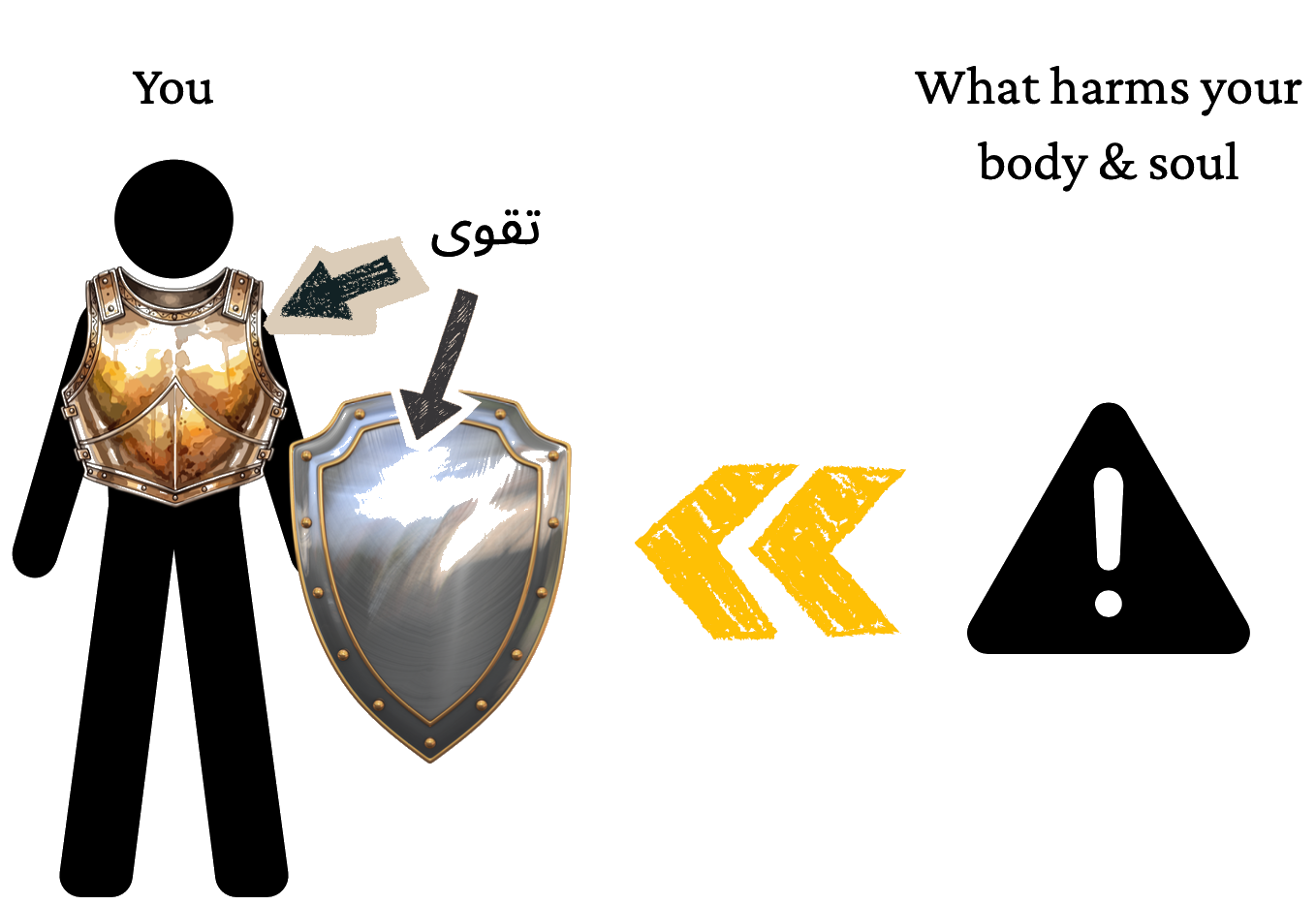
To understand the depth of the word “takwa” تقوى, we can return to its root:
وَقَى = to protect · to shield · to guard
So taqwa تقوى literally means:
“to create a protective shield between yourself and harm”
This protection is not only from external danger. It is also protection from choices that slowly drain you, habits that weaken you, and patterns that harm your body, heart, or soul over time.
Taqwa is a form of awareness — the kind that makes you pause and ask: “Is this bringing me closer to well-being… or slowly harming me?”
Seen through this lens, choosing wholesome food becomes an act of protection — a way of caring for the trust that is your body, and a quiet form of worship lived through everyday choices.
✦
Another way to visualize taqwa is:
“A conscious awareness of God that guides you to protect yourself — choosing what is right and avoiding what harms your body and soul.”
In this sense, taqwa is not only about avoiding sin — it is about protecting yourself.
We often hear the meaning of taqwa summarized as “avoiding sins” or “obeying Allah”, but we don’t always hear its deeper message: Allah is inviting us to guard ourselves from harm — emotionally, spiritually, and physically. Because what harms the body eventually affects the soul it carries.
✦
If you return to these verses, you’ll notice a word that keeps repeating: ṭayyibāt طيبات — good, wholesome, pure things.
“We shaded you with clouds and sent down to you manna and quail. Eat from the wholesome good things We have provided you. But they did not wrong Us — they only wronged themselves.”
“O you who believe, eat from the good and wholesome things We have provided for you, and be grateful to Allah if it is truly Him that you worship.”
(Quran 2:172)
God does not simply say “eat.” He says: eat what is wholesome
This shows us that what we eat matters — not only physically, but spiritually too.
Come to think about it, part of self-love is to choose food as if you’re choosing it for a king. Yes, you’re the King! or Queen
It doesn’t have to be fancy.. it can start with trying to filter out any food that may have been altered in a way that can harm your body.
This is not about restriction or guilt. It is about protection.
Doing this is part of following the recommendations of Allah to mankind in these verses.
✦
Think of it this way:
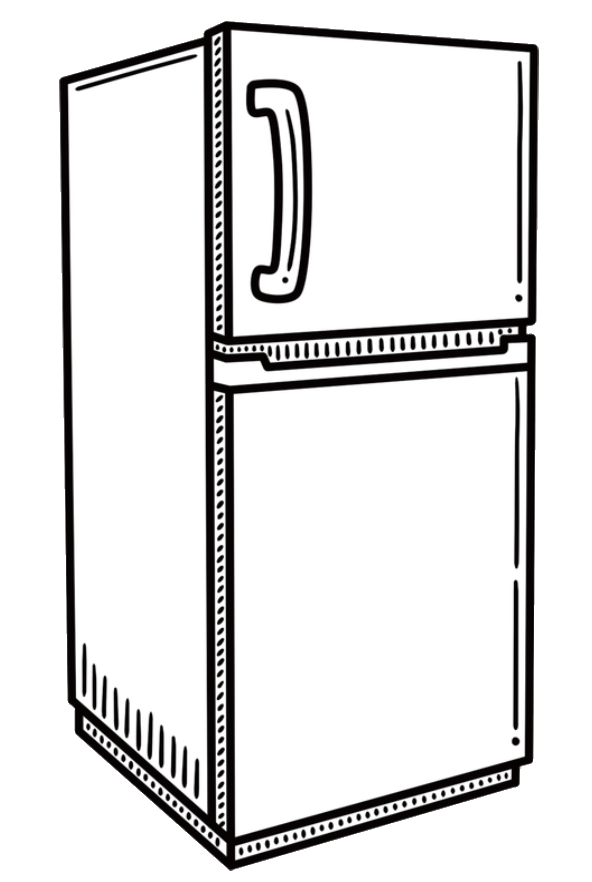
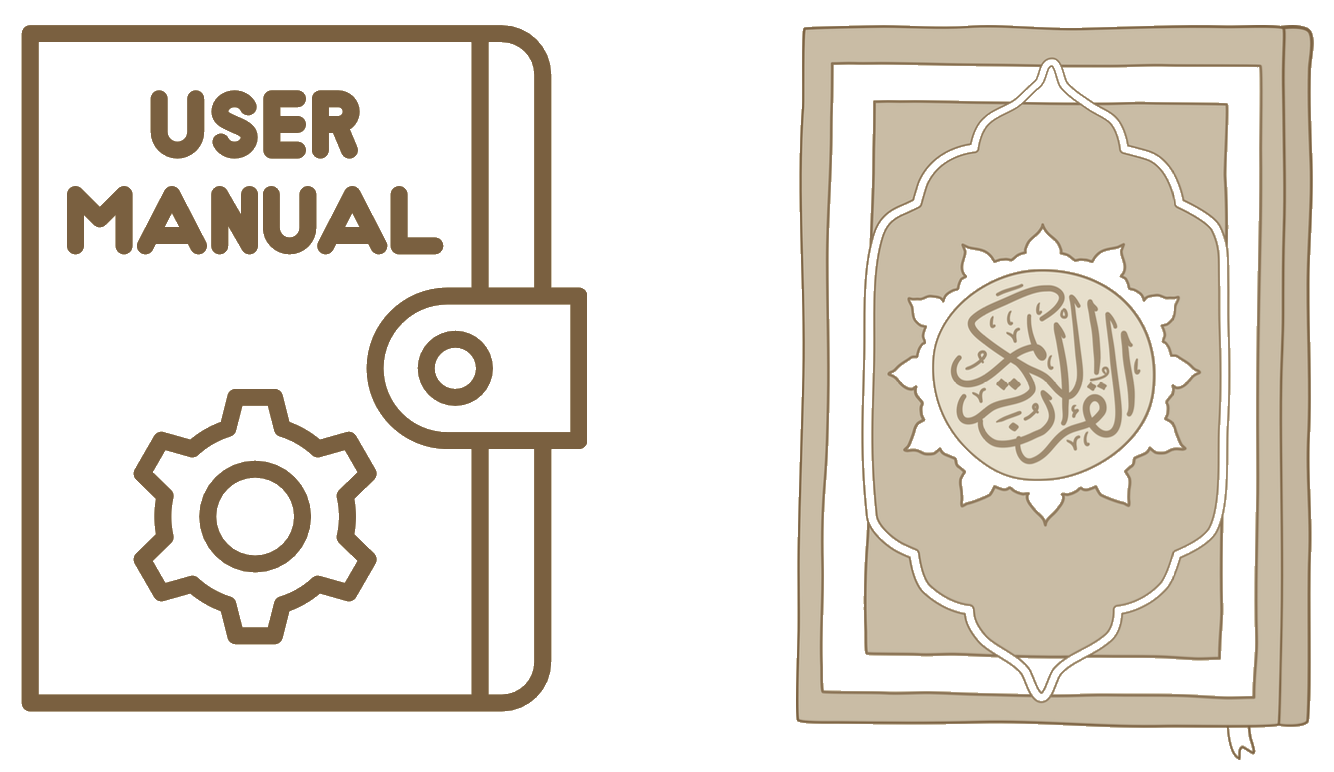
When you buy a new appliance (a fridge for example), and open its user manual, it will tell you what to do and what not to do in order to safely use the appliance and maximize its lifetime.
In the same way, the Qur’an is not only a “spiritual” book. It contains a user manual / guide for how to live well , inside out:
Healthy body → Happy body → Healthy & happy mind
This is not about control or restriction. It is about protecting what carries your soul in this life.
I heard a well-being expert once say “what you eat becomes part of you”; which suddenly made me realize that traces of what we eat stay within us — nourishing us, or slowly draining us — shaping our health, energy, and life over time.
Association between food and pleasure.. what’s behind it
Food is not just something we eat to stay alive. Sometimes, we reach for certain foods because they bring comfort, pleasure, or a familiar feeling we enjoy. Some foods even feel like a small moment of “happiness”.
Things can become complicated when we start relying on certain foods — especially when they are not nourishing, or when we eat them in amounts that don’t feel kind to our body.
You’ve probably heard the term emotional eating.
We’re not here to analyze every reason behind it. Instead, this is an invitation to gently explore the emotions that sit underneath your cravings.
The moment you notice and say to yourself: “Oh… this is me eating for comfort, not hunger,” you’ve already taken a big step.
Awareness is the beginning of freedom.
From there, the path becomes clearer on its own. You begin to understand your patterns naturally, in your own way.
For now, let this be your intention: Bring what was once unconscious into your awareness. Notice. Pause. Be curious.
This page is your space to explore that.
✦
Let’s look at a simple example.
Imagine you love bread — truly love it. You take generous portions with every meal, and it almost feels impossible to imagine eating without it.
Now pause for a moment: How do you feel when you eat that bread?
For example:
“I enjoy the feeling of holding the warm piece after cutting it… shaping it into a small envelope to hold the food… and the comfort that comes with that familiar ritual”.
✨ Your turn
Step 1 — Bringing Awareness to Your Comfort Food
Every soul has its small earthly comforts. Some foods become companions — familiar, soothing, always there.
Take a moment to name the food you feel most drawn to. The one that feels “hard” or “incomplete” to live without.
My comfort food is:
✦
Step 2 — Witness the Pleasure, Without Judgement
Close your eyes for a moment. Recall yourself eating this food.
Notice the tiny details: the touch, the scent, the ritual, the comfort, and the emotion underneath.
Example: “I feel a soft pleasure when I hold the warm piece of bread… the way I fold it to hold the food… the familiarity, the grounding… almost like a small moment of safety”.
Your reflection:
Let this be a gentle observation — not criticism, not analysis.
Just honest witnessing, noticing.
✦
Step 3 — Expanding the Heart’s Sources of Joy
Sometimes we place too much of our joy in one place.
Food becomes the easiest doorway to comfort — especially when other doorways feel closed.
Here, we gently open new doors.
List 25 activities that nourish your heart, spark curiosity, or reconnect you with life — things you rarely allow yourself to enjoy, or things you’ve never tried but feel drawn to.
They don’t have to be big. Even the smallest joys count.
Why we do this
This exercise helps your heart remember that joy is meant to flow from many sources — not just one.
When pleasure, comfort, and joy are spread across different areas of life, food naturally returns to its proper place: nourishment, not rescue.
As your heart discovers new openings for pleasure, comfort, and joy, your relationship with food naturally shifts into balance.
Write your 25 activities here:
If 25 feels like too much, start with whatever number comes easily. You can return and add more later.
✦
Step 4 — Turning Intention Into Gentle Action
You’ve chosen the activities that speak to your heart. Now let’s make a little space for them to exist in real life.
Big changes don’t happen all at once. They happen through small, kind steps. This is not about pressure or discipline. It’s about helping your intentions land softly in your day-to-day life.
Choose a few activities you feel drawn to, and write three very small steps that would help you begin each one.
Even the smallest step counts.
Break down the first 3 steps to make each activity happen
Activity
Step 1
Step 2
Step 3
✦
A Closing Reflection
As you look at the steps you’ve written, take a breath and and gently soften your shoulders.
This is not a to-do list. This is a way of honoring your heart.
Ask yourself:
“Which step feels like the lightest, kindest beginning?”
Let that be your doorway.
And remember — every time you choose a nourishing activity, you are teaching your heart that pleasure, joy, and comfort can come from many places… not only from food.
This is how the heart slowly expands its sources of delight.
This is how freedom begins — gently, quietly, one small step at a time.
Link between my “Real God” إله & Inner Peace..
﴿أَفَرَأَيْتَ مَنِ اتَّخَذَ إِلَٰهَهُ هَوَاهُ﴾
(سورة الجاثية : ٢٣)
“Have you seen the one who takes his own desire as his god?”
(45:23)
For a long time, whenever I read this verse, I felt that it didn’t really apply to me.
After all, I know that my only God is Allah.
I say “لا إله إلا الله” many times every day — at the very least in my daily prayers.
But slowly, I started asking myself:
What if “لا إله إلا الله” is not only about what we say… but also about what truly guides our actions?
Because declaring “لا إله إلا الله” means more than worshiping Allah alone.
It means that He becomes our compass — the One who guides our choices, our priorities, and our actions.
Nothing else should quietly take that place.
✦
Yet sometimes, without realizing it, something else may start guiding us.
A desire. A fear. An ego. A habit. A need for approval. An attachment.
And in those moments, our actions may reveal a different “Compass” than the one our tongue declares.
This is where inner awareness becomes essential.
Because the question is not only:
What do I say I believe?
But also:
What is actually guiding me from within?
Is it Allah, or something else?
✦
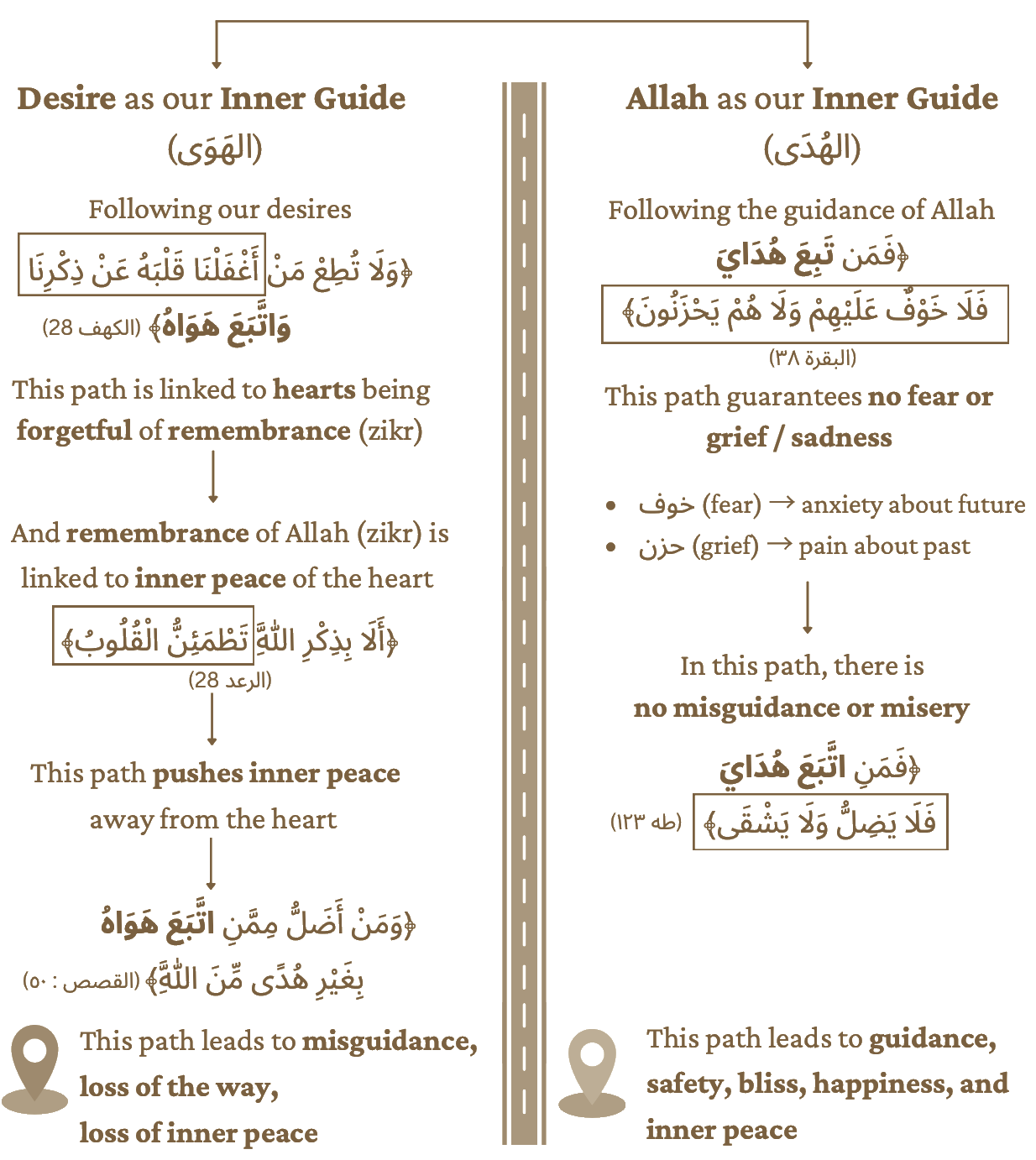
Two Possible Inner Compasses of the Heart
﴿أَفَرَأَيْتَ مَنِ اتَّخَذَ إِلَٰهَهُ هَوَاهُ﴾
(سورة الجاثية : ٢٣)
“Have you seen the one who takes his own desire as his god?”
(45:23)
This verse invites us to ask an important question:
What is truly guiding my life?
According to the Quran, there are two possible paths:
✦
What Is Truly Guiding Our Actions? How Shadow Work can help..
Earlier, we explored the concept of shadow work. We saw that many of our “automatic” reactions to triggers actually come from parts of ourselves that remain unconscious.
The goal of shadow work is to bring what is unconscious into awareness. When we become aware of these hidden patterns, they begin to lose their power over our reactions.
This process helps us respond more consciously, rather than reacting from a desire to be angry, or from fear or frustration.
As awareness grows, our reactions can begin to come from a place of greater inner balance, instead of impulsive desires.
This saves us from falling into this verse without realizing:
﴿أَفَرَأَيْتَ مَنِ اتَّخَذَ إِلَٰهَهُ هَوَاهُ﴾
(سورة الجاثية : ٢٣)
“Have you seen the one who takes his own desire as his god?”
(45:23)
In this way, working on our shadow can bring us closer to responding according to guidance rather than impulse or desires.
When a reaction appears, pause and ask yourself:
Is this coming from guidance or desire?
Is it coming from peace or anger?
Is it coming from clarity or fear?
This becomes a very strong reflective exercise.
The Inner Witness & the Nafs (Ego-Self)
﴿بَلِ الْإِنسَانُ عَلَٰ نَفْسِهِ بَصِيرَةٌ﴾
(القيامة ١٤)
(Quran 75:14)
At first, I understood this verse to mean that the human being is a witness against his own self — his nafs.
Then I noticed something subtle in the Arabic. The word بصيرة (basirah) is a noun, not an adjective.
The verse does NOT say:
بَلِ الْإِنسَانُ عَلَٰ نَفْسِهِ بَصِيرًا
Instead it says:
بَلِ الْإِنسَانُ عَلَٰ نَفْسِهِ بَصِيرَةٌ
This wording points not to a quality of the person, but to the presence of an inner faculty of insight.
When I noticed this subtle difference, I realized that there’s something important that God is bringing our attention to regarding our ego-self (nafs).
This suggests a subtle relationship between بَصِيرَةٌ and ego-self (nafs).
On our ego-self (nafs), there’s a layer of insight / inner witness, something within us that knows our truth. Even when we try to justify ourselves outwardly, this inner witness cannot easily be deceived.
So my understanding of this verse became: The human being carries within himself a faculty that perceives the truth about his own condition.
✦
The following verse reinforces this understanding, because if we try to present excuses for anything we did, we still have an inner witness - بَصِيرَةٌ (basirah):
﴿وَلَوْ أَلْقَٰ مَعَاذِيرَهُ﴾
(القيامة ١٥)
“Even if he presents his excuses”
(75:15)
The scholar Abu Hamid Al-Ghazali often described بَصِيرَةٌ (basirah) as the eye of the heart (عين القلب).
For Al-Ghazali, when the heart becomes purified, this inner sight allows a person to:
recognize their inner state,
perceive truth,
distinguish between divine inspiration and egoic impulse.
Thus the verse can be understood spiritually as: The human being possesses an inner eye capable of perceiving his own reality.
Throughout this journal we have explored practices that help us:
remove the veils of the ego,
purify the heart,
in order to allow بَصِيرَةٌ (basirah) to become clear..
When this happens, we can more easily recognize:
our own intentions,
our hidden ego motives,
the difference between divine guidance and desire.
This can help us recognize which path we are closer to:
“And who is more astray than one who follows his own desire without guidance from Allah?”
(28:50)
How Desire Can Disguise Itself
Desire (الهوى) does not always appear in obvious forms.
Sometimes it disguises itself as:
anger that feels justified,
fear that feels protective,
control that feels responsible,
avoidance that feels like peace,
pride that feels like dignity,
or attachment that feels like love.
This is why self-awareness is important.
Because without noticing it, we may believe we are acting from clarity and guidance, while our reactions are actually being driven by hidden desires, fears, or ego needs.
The ego-self (nafs) is subtle. It often knows how to justify what it wants.
✦
Reflection
Take a quiet moment to observe your ego-self (nafs) more closely.
In what ways does desire (الهوى) most often disguise itself in my life?
“I just want to feel comfortable”
“I need to defend myself”
“I want others to approve of me”
“I need to stay in control”
“I deserve this”
“I’m just protecting my pride”
“I’m just protecting my peace”
“I don’t want to feel discomfort”
“I’m only reacting because of others”
“I want immediate relief or satisfaction”
“I already know I’m right”
Other:
Think about a recent reaction that disturbed your inner peace. Sometimes what appears on the surface is not the true cause beneath.
What was beneath the reaction?
Fear
Pride
Attachment
Desire for control
Desire for comfort
Anger
Need for validation
Other:
✦
Then gently ask yourself:
If I had paused before reacting, what might guidance (الهدى) have invited me to do instead?
Then gently ask yourself:
What would change in my life if ﴿فَمَن تَبِعَ هُدَايَ﴾ became my inner compass, and I sincerely tried to align my actions with “لا إله إلا الله”? What would my life feel like if guidance (الهدى) became stronger than desire (الهوى) within me?
✦
الهدى vs الهوى
Guidance Desire
Between الهوى & الهدى there is only one letter difference, but between them are two completely different paths for life.
Inner Compass Tracker
At the end of a day, gently reflect: were most of my actions guided by desire, or by guidance?
Date
Most of my actions were from:
Desire (الهَوَى)
Guidance (الهُدَى)
Open Reflection
When you begin to see what is behind the urge, you are no longer carried by it — you begin to choose beyond it.
@mirrorwithinjournal
Journey into the Game of Life
✦
Journey into the Game of Life
Shifting Perspective, Meaning & Inner Freedom
This Journey invites you to explore how you experience life and the meaning you give it.
Notice how perspective shapes what you feel, expect, and hold onto.
A shift in how you see can change how you move through it.
Life as a video game…
When you’re playing a video game, you choose an avatar to represent you. You start at a certain level, and every time you level up, you feel excited, stronger, and more confident.
Now imagine you are the character inside that game. You would want your avatar to stay in good health so he doesn’t lose the game or have to start all over again.
Along the journey, you find health packs — moments that recharge you when your energy drops.
At the same time, there are things that can drain your avatar’s health bar — attacks from other players, unexpected falls, or small failures along the way.
To stay strong against the enemies or “evil characters”, your avatar needs to maintain his health and energy as much as possible. That’s the only way to reach higher levels and eventually win the game.
You play to win. And to win, you must overcome challenges.
Every time you overcome one, you feel more excited, more confident, and more motivated to face the next.
Sometimes you even have to repeat the same level over and over until you learn how to overcome the challenge blocking your progress.
Along the way, you might collect coins, boosters, or first-aid kits that help you recharge and continue your journey. Sometimes you even discover hidden gems — unexpected gifts that deepen your inner confidence and gently carry you toward your purpose — to finish the game.
Now imagine if the video game had no challenges and no levels.
How boring would it be?
If the game were that easy, how often would you want to play?
Can a player willingly stay in the same level forever? Maybe for a short while — exploring, experimenting, trying things out. But eventually the spark fades. And when everything becomes predictable and familiar, the excitement fades… sometimes slowly turning into emptiness… or quiet sadness.
✦
Life is the same.
Staying in your comfort zone — just like staying in the same level — makes the journey less exciting than it could be. Moving to new levels and unlocking new skills is what makes life feel alive.
Some video games don’t even have “levels” — instead, they offer new territories to explore, new missions, new challenges.
That’s very similar to our life on earth. A player cannot stay in the same area forever doing the same repetitive task.
Without challenges, the excitement disappears.
If a player refuses to leave the safe area they know well, they eventually face “burnout” inside the game…
They’re still playing, but with no joy. Just passing time. No curiosity. No sense of adventure.
Now imagine your life is a video game. Every challenge hides behind it an opportunity to unlock a skill within you that was waiting to be discovered.
This is how the game shapes the player.
Challenges make a game exciting. Challenges can make your life exciting too — if you approach each challenge with the mindset of a player in a temporary game — a game that isn’t real.
✦
In life, just like in games, you move through different levels. And every time you face a challenge, you choose which mindset to adopt:
Fixed mindset: You only see the challenge, which blocks your vision from seeing the hidden opportunity behind it.
Growth mindset: You see the challenge and the hidden opportunity behind it. This allows you to think outside of the box to find a solution, and in the process, a new skill is born. Once you overcome the challenge, you feel more confident in your journey and empowered to move to the next levels of your life.
Life Levels Map — Your Journey as a Video Game
Now try to map your life so far as if it were a video game you’ve been playing since the day you were born.
Imagine your body as your avatar, and picture yourself observing this life from outer space — watching the journey your avatar has been living on Earth.
This exercise invites you to step outside your story for a moment, observe your journey from above — like a player watching their avatar — and notice how every “level” quitely shaped who you are today.
✦
Time-Travel Exercise: Meet Your Avatar at Level 0
Imagine you have a time machine. You travel back to the year you were born — the very beginning of your personal game.
Your avatar appears on screen for the first time.
Describe your avatar at Level 0:
Gender:
Hair color:
Hair nature (straight, wavy, curly, coily, etc.):
Skin color:
Eye color:
✦
Avatar Abilities
Just like every character in a video game begins with certain natural abilities, your avatar started its journey on Earth with built-in traits, strengths, and potential.
These abilities are not achievements — they are the qualities your avatar was born with.
Take a moment to observe them without judgment.
What natural abilities does your avatar come with? (Examples: sensitivity, courage, curiosity, calmness, creativity, alertness, kindness, determination)
What were your avatar’s natural challenges or sensitive areas? (The areas where your avatar naturally struggled: shyness, fear, impatience, low confidence, impulsiveness, etc.)
What was your avatar naturally drawn to? (Objects, activities, people, environments, sensations, exploration…)
What did your avatar naturally avoid or feel cautious around?
✦
Now let’s continue with a flashback to the challenges your avatar faced — and the skills that were unlocked and born through them.
As you fill this in, go at your own pace. You don’t need to revisit every challenge — only the ones that feel safe to touch today. Focus less on what happened, and more on what grew inside you because of it.
Age
Challenge / difficulty faced at that time
How you did you overcome this challenge? What did you learn, or what skill was born because of it?
Example13
Bullying by schoolmates
“it was hard at first, but then I learned to speak up, and became a rebel for a while, after being so “invisible”, I learned how to face the kids who were bullying me, and respond back to them..”
✦
Take a moment to look at the skills that were shaped in you through the challenges you went through.
Now imagine you had a time machine, and you could travel back and erase some of those challenges.
If those challenges never happened…
If the path had been easier…
If the struggle was removed…
How different would your life be today — without the skills that were born when you overcame those challenges?
This is not about justifying what hurt you — it’s simply an invitation to notice what grew in you despite it.
Write whatever comes to your mind:
Example: “If I hadn’t been bullied, my personality would have stayed soft and unexpressed. My voice would have remained quiet. I wouldn’t have learned so early to speak up or protect myself when someone tried to push me. I might never have discovered the courage that was hidden within me.”
Gentle reminder: You didn’t choose your challenges — but you did choose how you showed up within them.
Looking back at your previous levels, you might already feel grateful for some of the skills you developed after facing the challenges in your life so far.
But remember: there are still skills within you that haven’t been discovered yet — hidden abilities waiting for the right moment, the right challenge, or the right level to come to the light.
In video games, every player starts with the same basic set of abilities. But only players who keep playing continue to uncover hidden skills inside themselves — and use those skills to overcome the challenges in each level.
And just like in games, a journey with only two levels wouldn’t be exciting. A game becomes meaningful when it has many levels — each one offering something new to learn, something new to unlock, something new to overcome.
Now, take a look at your current level — the phase you’re living in right now.
What challenges is your avatar facing at this level?
Challenge I’m facing right now
What skill or quality might this challenge be growing in me?
Small steps I can take right now
You don’t need to solve everything — just notice what this level is asking of you.
Video games & Triggers
Back to video games… What if your triggers were one of the ways your avatar upgrades its skillset?
What if each trigger was like that mysterious “?” box in a game — the one you hit without knowing what’s inside — and a hidden reward appears?
A secret power. An unexpected boost. A new ability you didn’t know you had.
What if every trigger you face is actually a shortcut in the game — a doorway to discovering a new route, a new upgrade, or a new perspective that makes your journey more exciting, more meaningful, and more fun?
What if some triggers are not here to hurt you — but to teach you? What if every trigger is a teacher in disguise, showing you:
where healing is needed,
where strength is quietly forming,
where a new skill is waiting to be born,
and which part of you is ready to evolve to the next level?
In this game of life, triggers aren’t your enemies. They are your teachers, leading you toward your growth, your power, and your next upgrade. At your pace. In your time.
✦
In your game of life, what are the triggers that keep repeating for your avatar?
Remember the shadow “3-2-1” exercise we did earlier in this journal?
You can now go back and do it for your avatar..
You will gradually start looking at triggers differently.. not as “bad things” that happen to your avatar, but as “teachers in disguise” sent especially for your avatar to progress in the game of life.
“You are the mirror of the Divine, and the Divine is your mirror. Look at yourself, and you will see God.”
- Ibn Arabi
One video game for all ?
What if we are all playing the same video game?
If you’re currently in Level 5 of the game, your sister might be exploring Level 1, your neighbor navigating Level 3, a friend walking beside you in Level 5, and a colleague moving to Level 4.
In this game, levels don’t measure worth. They simply reflect levels of awareness.
Levels are not about age, intelligence, success.. and not about being “better” or “worse.” A younger person may carry deep awareness, while someone older may still be learning an earlier lesson.
Awareness doesn’t follow timelines. It unfolds when it unfolds.
Some people already sense they’re in a temporary game — an experience — and they move through life with that awareness. Others are not yet aware. And some people only realize it near the end of their journey, when they leave this world and finally see the fuller truth of their existence — the reality that was present all along.
Everyone is exactly where they need to be for the lesson they are learning right now.
✦
So how do you communicate with someone who is playing in a different level, experiencing a different part of the game?
You begin by remembering: their experience is different, their challenges are different, their lessons are different, and the number of times they need to repeat a lesson before moving on is different too.
No two journeys are identical. This is why empathy matters.
The person in front of you may be carrying a lesson you have already learned — or one you have not yet reached.
Maybe they know something you don’t — a lesson, a truth, an experience that raised their awareness.
Or they may still be learning — repeating the same level as many times as their soul needs until it’s ready to move forward.
Both states are valid.
Every level has a purpose. Each level prepares you for the next one.
No level is wasted. Every level strengthens, trains, and shapes your avatar for the journey ahead.
✦
How to communicate with people on different levels
In a video game, it’s unrealistic to expect two players in different parts of the game to see the world in the same way. Each player is shaped by the lessons they are currently learning. Awareness levels shape:
how people understand situations
how they react
what they fear
what they focus on
how they communicate
and what triggers them
Understanding this changes the way we relate to others.
Here’s how to communicate across different levels of awareness:
1. With empathy Remember: their reactions come from the lessons they are currently facing. They may be working through something you’ve already encountered — or something your soul hasn’t needed to learn yet.
2. Without forcing awareness You can’t rush someone into seeing the lesson clearly. Growth happens in its own timing. Every player upgrades when the lesson has been integrated.
3. With patience A player repeating a level doesn’t need judgment — they need space, safety, and time to learn.
4. By honoring hidden strengths Someone in a different stage of the journey may carry a wisdom you don’t. Awareness doesn’t develop in a straight line.
5. By releasing the need to be understood Different levels create different perspectives. Sometimes the goal isn’t to be understood — but to understand.
Signs in life Just like signs in video games
In video games, every player receives signs.
Some signs are obvious:
➡ arrows on the floor
➡ glowing pathways
➡ a door that suddenly opens
➡ a character who appears with a message
Other signs are subtle:
a sound in the background,
a small symbol on the wall,
a hidden object on the map.
Some players notice them immediately. Others walk right past them — not because they are bad players, but because they are distracted, rushing, or focused only on obstacles.
Life works the same way.
Signs in life
Just like in a video game, life places signs along your path — to guide your next move.
In the game of life, these signs can look like:
a repeated thought that won’t leave you alone
a synchronicity that feels too precise to ignore
a feeling you can’t ignore or push away
the same message coming from different people
a sudden discomfort (a trigger)
something that suddenly clicks
a door that opens
a door that closes
a person who appears at the right moment
an opportunity that feels aligned
a pattern that repeats until the lesson is learned
Some signs are clear and loud — like arrows on the screen.
Others are quiet and hidden — like Easter eggs you only notice when you slow down, pause, and explore.
The game doesn’t rush you. But it does repeat the message until you’re ready to see it.
✦
Why some players see the signs and others don't
Just like in video games, noticing signs depends on a few key factors:
1. Awareness Level A more aware player notices the small clues. A less aware player needs bigger, louder signs. Some players see the hint. Others only notice once the obstacle appears.
2. Speed When you rush through a game, you miss secrets. When you rush through life, you miss guidance. Slowing down changes what becomes visible.
3. Emotional State A calm mind notices patterns. A stressed or overwhelmed mind walks past them. When you’re emotionally flooded, even clear signs can feel invisible.
4. Readiness Even in games, a door won’t open until your avatar is ready. In life, you won’t notice certain signs until your awareness reaches that level. Timing matters.
5. Perspective Some people view life as random. Others view it as guided. Those who believe there is meaning naturally pay more attention — and tend to recognize signs more easily.
✦
How to Notice Signs More Easily
Life is always speaking… the question is: are we tuned in?
Just like in video games, signs in life become easier to notice when you develop certain abilities. These are not supernatural powers — they are simple shifts in awareness.
Here are gentle ways to start seeing the signs more clearly. You don’t need to practice all of these. Even one is enough.
Think of them as optional upgrades — not rules.
1. Slow Down the Pace of Your Game
In video games, when you rush, you miss hidden treasures. Life works the same way.
When you slow down, you begin to notice:
patterns
red flags
synchronicities
intuitive nudges
emotional cues
opportunities
Slowing down naturally raises your awareness level.
2. Pay Attention to Repetition
In games, repeated symbols always mean something.
In life, repetition means a message is trying to reach you:
the same message from different people
the same lesson reappearing
the same emotion resurfacing
Repetition is life saying: “Look here. This matters.”
3. Listen to Your Emotional Compass
Emotions are one of life’s clearest signs:
Peace → aligned
Tension → something is off
Excitement → move forward
Anxiety → something needs attention
Trigger → hidden lesson or skill waiting to be born
Emotions are not here to bother you — they are here to guide you.
4. Notice When Something Feels “Placed”
Sometimes life puts something directly on your path:
a comment that hits your heart
a book that feels meant for you
a person who appears at the right time
an idea that shows up out of nowhere
an opportunity that feels aligned
These are placed clues, like items in a game level waiting to be discovered.
5. Follow What Pulls You (Not What Pushes You)
In games, the right path pulls your attention.
In life, that pull often feels like:
curiosity
inspiration
a quiet inner nudge / pull
gentle excitement
These are signs you’re being guided.
Push energy — force, pressure, fear — usually pulls you away from your path.
6. Notice the Closed Doors Too
In video games, a locked door is a message.
In life, a closed door can mean:
not yet
not this way
something better
a redirection
Closed doors are not punishments. They are guidance.
7. Trust That Nothing Is Random
In games, every clue is placed with intention. In life, nothing is random — even when it looks random.
When you begin to trust this:
signs become clearer
messages become louder
awareness becomes sharper
Because belief opens perception.
Your heart as the in-game navigation system
In every video game, the player has a navigation tool :
a map,
a compass,
a guiding light
or an inner radar that shows the way forward.
Without it, the player gets lost — not because the game is impossible, but because direction is missing.
In life, your heart is that navigation system.
Your heart is your inner compass It helps you:
notice signs
sense direction
feel what is right
recognize what is wrong
understand lessons
move toward what is meant for you
But just like in a video game, this navigation system doesn’t always display clearly. Sometimes the heart shines with clarity and direction… And sometimes it becomes covered with clouds, making the signs harder to read.
✦
When the heart is unpolished, the signals become faint
An unpolished heart — a heart carrying:
fears
ego defensiveness
emotional dust
unhealed wounds
resentments
judgments
… creates clouds over your inner map.
Just like a foggy screen in a game, an unpolished heart can:
blur the signs life is sending
distort your intuition
weaken your sense of direction
magnify anxiety instead of insight
confuse your inner compass
pull you back into the same lessons
make you focus on triggers rather than guidance
It’s not that the signs disappear. It’s that they become harder to perceive clearly.
Your inner navigation system is still active - but the screen is smudged.
✦
Polishing the heart clears the map
When you begin polishing your heart — through:
releasing judgments
reflection
honesty
forgiveness
letting go
compassion
self-awareness
openness
healing the inner child
understanding your triggers
… the clouds begin to lift.
And suddenly:
signs start to make sense
intuition becomes louder
clarity replaces confusion
lessons reveal themselves
you stop repeating old levels
you can see doors that were always there
you can feel the direction your soul is asking you to walk
A polished heart makes the path visible.
✦
How the Ego Interferes With the Navigation System
Why the heart’s map becomes cloudy, and how awareness clears it
In video games, if the screen glitches, the navigation becomes unreliable. The map still exists — but it’s harder to trust what you’re seeing.
Life works the same way. When the ego takes control, the heart’s guidance becomes distorted.
The ego is not “bad”. It exists to protect you. But sometimes, its protection blocks clarity instead of serving it.
Here’s how the ego interferes with your inner navigation:
1. The ego reacts, the heart responds
When the ego is triggered, it reacts automatically:
defending,
attacking,
shutting down,
running away.
This creates noise — and you lose the subtle signals of your heart.
The heart speaks softly. The ego speaks urgently.
2. The ego fears change
The ego wants to keep you safe in familiar levels — even when the next level is healthier for you. So it interprets signs & guidance as danger. Growth as risk. Expansion as threat.
3. The ego loves being “right”
When being right becomes more important than being at peace, the heart’s clarity fades. The ego argues. The heart understands.
4. The ego judges — itself and others
Judgment creates tightness in the chest, limiting perception. An unpolished heart sees less. A soft heart sees deeper.
5. The ego confuses triggers with threats
A trigger is often a hidden lesson. But the ego sees it as an attack. So instead of unlocking a new skill… the player repeats the same level.
6. The ego attaches to old stories
“People always leave.” “I’m not enough.” “I don’t deserve this.” Old stories become permanent filters on your inner map. You no longer see life as it is — you see it through old wounds.
7. The ego wants control
The heart navigates through intuition. The ego navigates through fear. Trying to control everything blocks the signs meant to guide you.
✦
Bringing It Back to the Heart
Awareness doesn’t fight the ego. It gently steps back into the player’s seat.
And from there — the heart can guide again.
The moment you return to your heart — through honesty, softness, humility, or quiet presence — the fog begins to lift.
Navigation clears. Guidance becomes easier to hear. Signs make sense again.
The heart does not shout. It whispers.
And when you learn to listen, you realize its whisper carries more truth than all the noise the ego can make.
✦
Signs you're acting from the heart
These are the signals of a polished heart, aligned with your inner navigation system:
1. Your body feels calm Even if the situation is difficult, something inside feels grounded.
2. Your words feel true You speak honestly but gently, without needing to prove anything.
3. You feel spacious inside There is room for you — and for the other person. No tightness. No pressure.
4. You listen Not to respond — but to understand.
5. You feel connected to your values You act in a way that feels aligned with who you want to be.
6. You feel compassion — even while setting boundaries Compassion and firmness can exist together.
7. You can see beyond the moment You’re aware of the bigger purpose of the situation, not just the emotion of the moment.
8. There is clarity You may not see the whole path — but you know the next step. The heart brings quiet confidence — not loud certainty.
✦
Signs You're Acting From the Ego
These are the signs of a clouded navigation system, where old wounds or fears take the lead:
1. Your body tightens Chest, jaw, stomach — tension is the ego’s first alarm.
2. You need to be right Winning becomes more important than understanding.
3. You react quickly Before listening. Before thinking. Before feeling.
4. You judge Yourself or others. Often both.
5. You feel threatened Even when no real danger exists. The ego sees danger where the heart sees opportunity & growth.
6. Your thoughts get loud Overthinking, replaying, predicting, defending — noise replaces clarity.
7. You feel disconnected from yourself You act, but it doesn’t feel like “you.” You later think: “Why did I say that?”
8. Fear is behind the choice Fear of losing control. Fear of being rejected. Fear of being wrong. Fear of being hurt. The ego brings tightness — the heart brings openness.
Remember: you are the player, not just the avatar
In every video game, there is a difference between:
the avatar (the character inside the game), and
the player (the consciousness controlling the character).
The avatar reacts inside the game. The player chooses the next step.
Most people forget this.
They live their days as if they are the avatar - fully merged with the emotions, triggers, fears, and noise of the moment.
When this happens, awareness drops, and life feels heavy, confusing, or dark.
But the moment you remember you are the player behind the avatar, something shifts:
reactions soften
choices become clearer
you rise above the moment
a wider perspective opens
you feel less controlled by emotion
you act from awareness, not fear
you stop repeating the same level
Awareness returns.
✦
The avatar reacts. The player chooses
In any situation, you can ask yourself: “Am I reacting as the avatar… or choosing as the player behind it?”
The avatar:
reacts automatically
gets triggered
feels attacked
takes things personally
fears losing
repeats patterns
acts from old wounds
The player:
observes
pauses
chooses consciously
sees the bigger picture
notices the lesson
responds with awareness
upgrades to the next level
The moment you notice the difference, you shift from unconsciousness → awareness.
✦
Awareness is remembering
Awareness is not effort.
It is remembering:
“I am not my avatar. I am the consciousness guiding it.”
Once this clicks inside:
triggers soften
reactions slow down
emotions become information, not identity
choices become intentional
life feels like a game you understand
And you rise — naturally — to higher levels.
✦
Reflection prompt
In moments where I felt stuck or reactive lately, was I acting as the avatar — or choosing as the player?
✦
From which seat am I reacting?
Avatar Seat
Player Seat
Reflection
Which side has more check marks right now — Avatar or Player? (No answer is wrong. This is awareness, not a test.)
Wherever you are, that’s your starting point. Awareness begins the moment you notice the seat you’re in.
✦
Before we close this journey, let’s pause for a moment.
The idea of the Player — the one who observes the Avatar — was introduced through the language of video games because it makes something invisible easier to see.
But this awareness is not new. And it does not belong to games.
Long before screens and controllers, this same capacity to notice oneself, to step back from reaction, and to choose with awareness, was already recognized in Islam as part of the human inner life.
What we called the Player is simply a familiar truth — seen through a modern lens.
Awareness in the Islamic Tradition
In Islam, the human being is not reduced to impulses, emotions, or reactions. There is an understanding that:
the nafs reacts,
the heart feels,
the mind interprets,
but awareness can witness all of this.
Islam invites us to notice what is happening inside us — not to suppress it, not to deny it, but to see it clearly. This is why reflection, and awareness are emphasized so deeply in the tradition.
Watching the Nafs, Not Being Ruled by It
The nafs (ego-self) is not an enemy. It developed to protect you, to survive, to navigate the world. But when it reacts automatically — through fear, anger, pride, or defensiveness — Islam teaches that pausing matters.
An example of a pause is wudu’ (ablutions) that we are invited to do whenever anger emotions arise.
That pause is not weakness. It is awareness.
It is the moment when you realize: “Something is happening inside me… and I can see it.”
That seeing is what this journal has been pointing to.
Muraqabah: Gentle Watchfulness
Islam has a beautiful concept called muraqabah — a state of attentive awareness. It is the ability to remain present with what is happening inside you, while remembering that you are not lost inside it.
Not controlling. Not judging. Just watching with honesty.
This is the same awareness you practiced when you:
observed your reactions instead of acting immediately,
wrote about your triggers instead of fighting them,
noticed your inner patterns with curiosity rather than blame.
Now that you’ve learned how to recognize the signs, soften your heart, and shift from the avatar to the player’s seat and become the observing player, something has already changed. You’re moving through the game differently.
Awareness itself is an upgrade.
And once you start seeing challenges, triggers, and people’s levels with more clarity and compassion, you naturally begin moving toward your next level.
The question now becomes:
How do you move to the next level of the game with grace?
✦
How to move to the next level of the game with grace
In every game, moving to the next level requires two things:
mastering the current challenge
and collecting the skill born from it.
Awareness works the same way.
Here’s how to move into your next level intentionally and gently:
1. Identify your avatar’s current challenge
Ask yourself: What is life asking my avatar to face right now?
2. Look for the hidden opportunity behind it
Every challenge carries something within it. Ask yourself: What is being strengthened, awakened, or healed in my avatar through this? The lesson may not be obvious — but it is always there.
3. Name the skill being born in your avatar
Challenges don’t just test your avatar — they train it. Ask yourself: is this building
courage?
boundaries?
surrender?
self-worth?
honesty?
patience?
Naming the skill helps your avatar claim it.
4. Release resistance
Resistance keeps you replaying the level. Acceptance helps you move on.
5. Celebrate small upgrades
Growth doesn’t only come from big breakthroughs. It shows up when you pause instead of react, notice a trigger earlier, speak more honestly, set a boundary, or choose rest over pressure. If something shifted inside you — even slightly — that’s an upgrade. Notice it. Name it. Let it count. When progress is recognized, the lesson integrates. When it’s ignored, the level tends to repeat.
6. Stay open to the “secret doors” of this level
Some paths don’t look like doors at first: Triggers. Discomfort. Intuition. Synchronicities. These are not obstacles — they are signs quietly pointing toward your next level.
Final reflection: Your next level awaits
Take a moment to pause. You don’t need to know everything — just notice what’s already stirring.
What feels like the main theme of your next level? (For example: boundaries, patience, courage, trust, honesty, rest, self-worth…) What do you think your next level in life is asking you to practice or learn right now?
What intention do you want to carry with you into this next phase of the game?
You don’t move to the next level by force — you move when you’re ready to walk forward with awareness.
✦
Open Reflection
As you become more aware of how you move, the game begins to feel different.
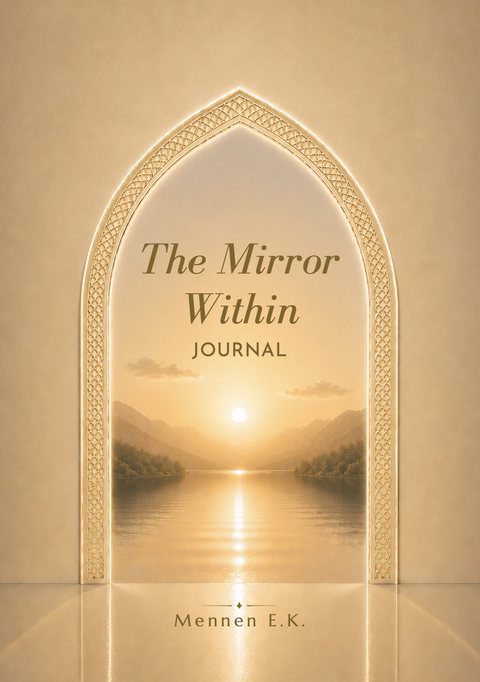

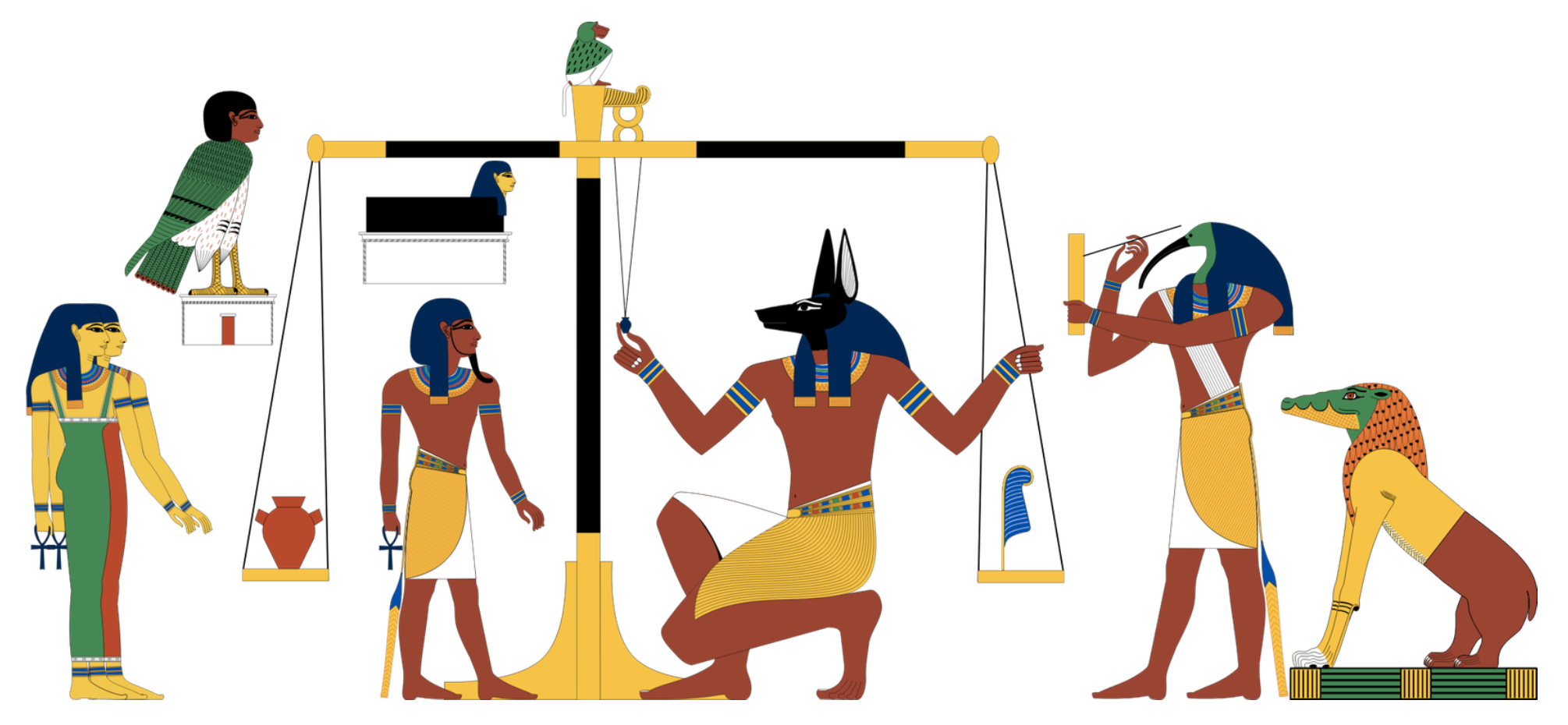


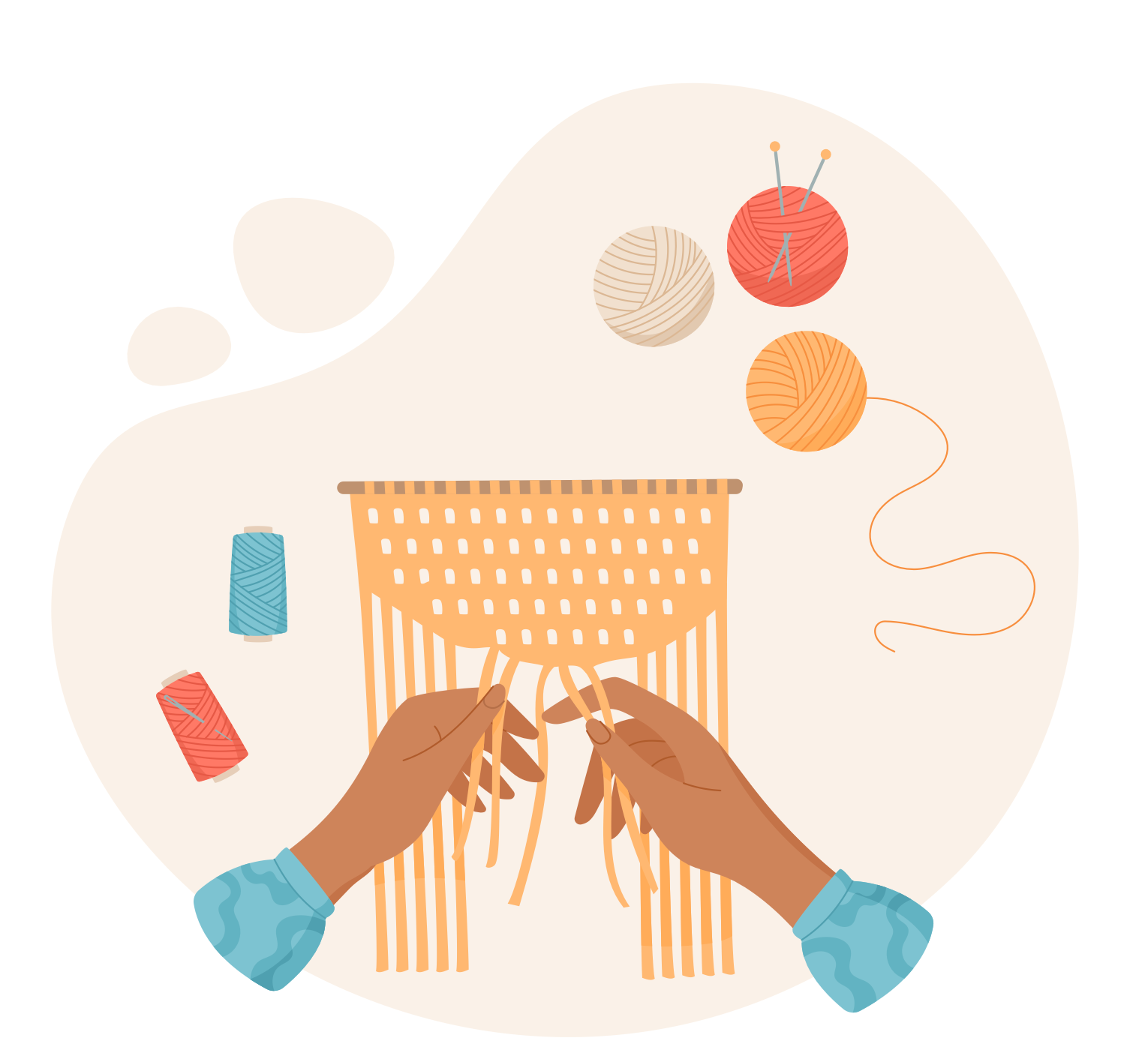







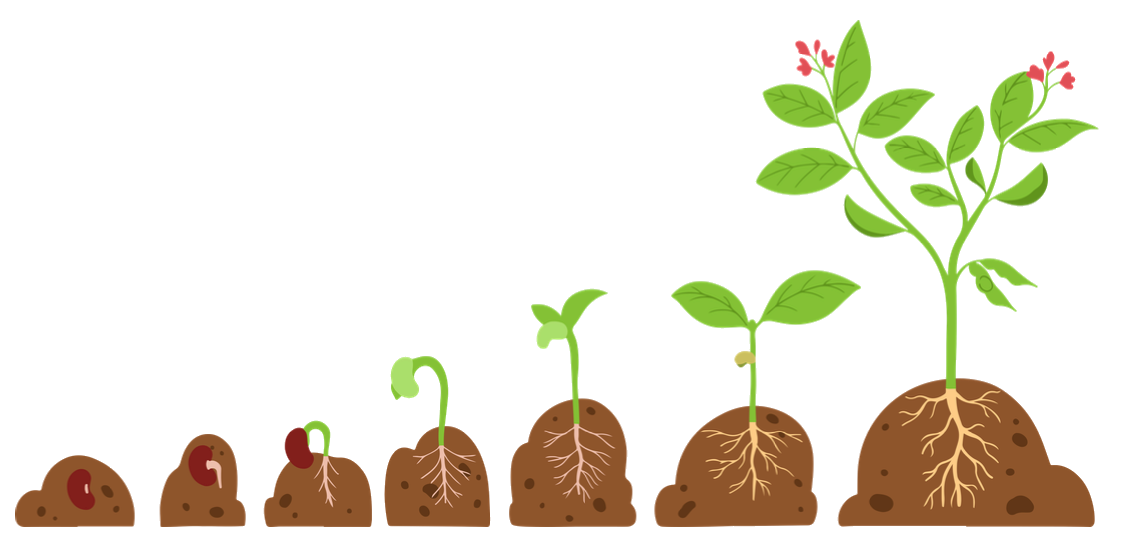
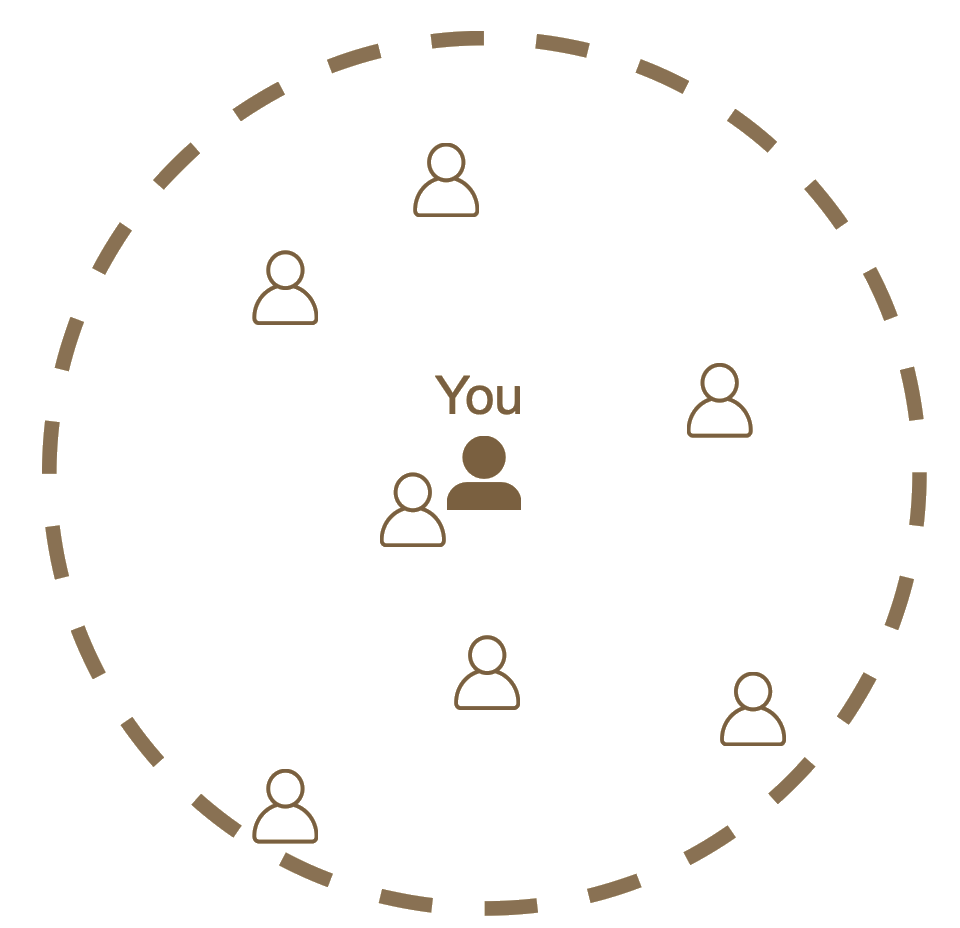
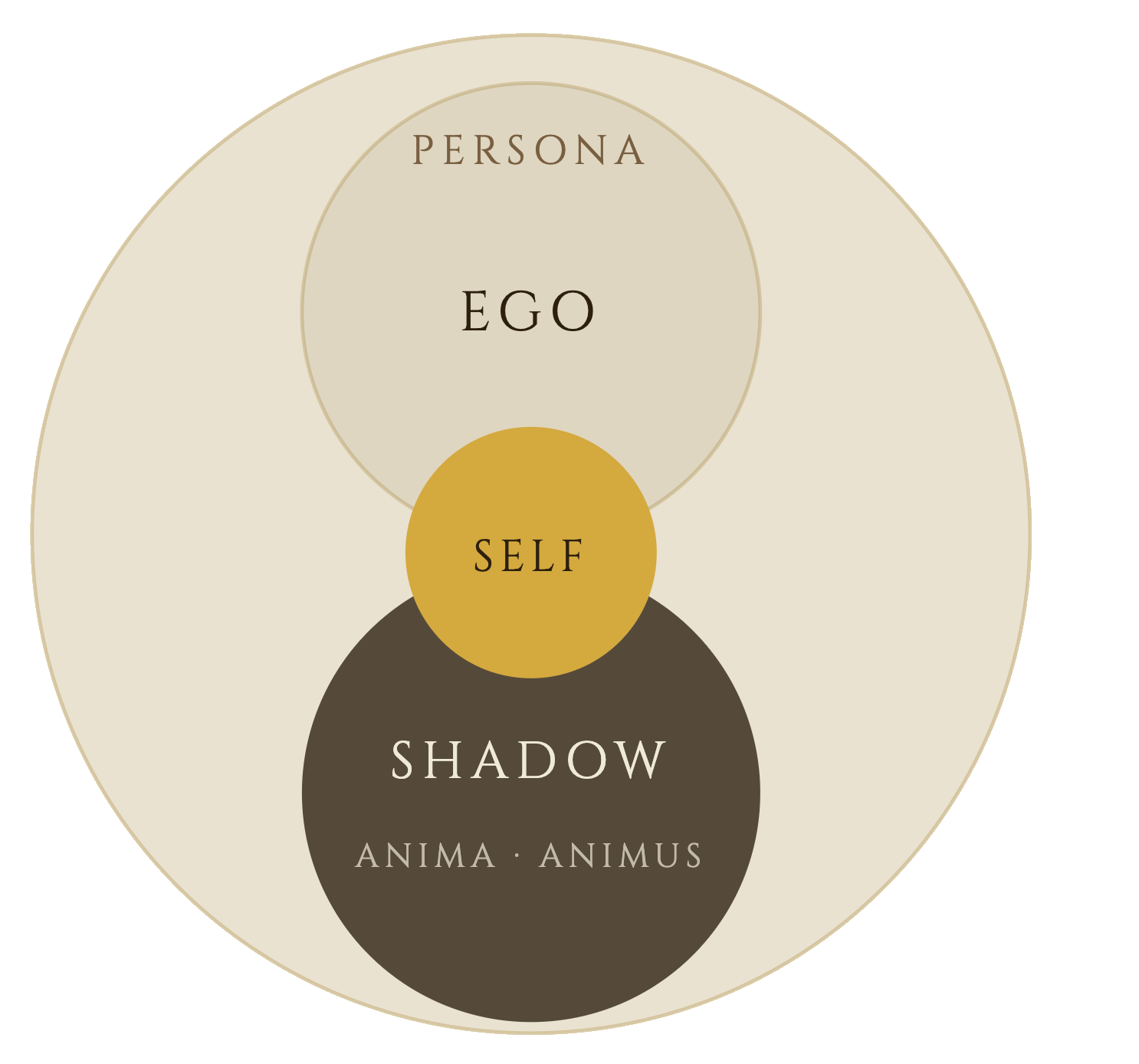



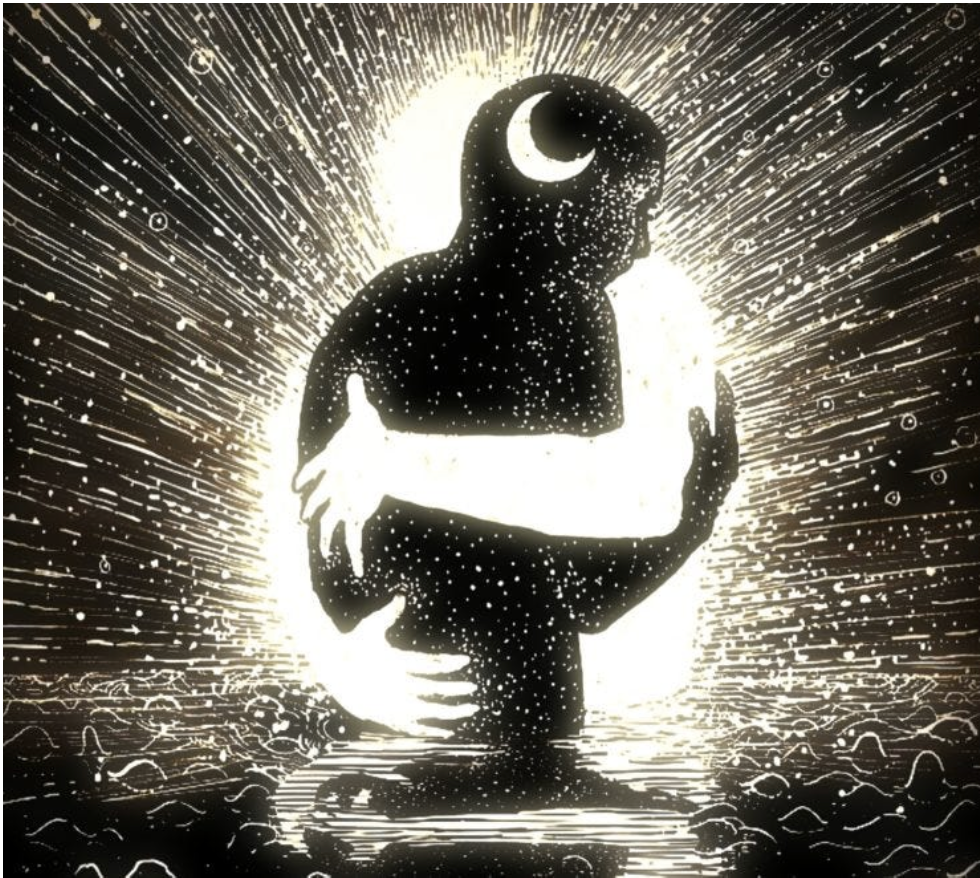
 Let's set a new intention together: